As fate would have it, as we came to the interview, Norm was about to receive a special award from Georgia Hawley of The Midnight Mission presenting Norman Harris with a Heart of the Mission honor, recognizing his longstanding support of the organization’s work serving Los Angeles’ unhoused community.
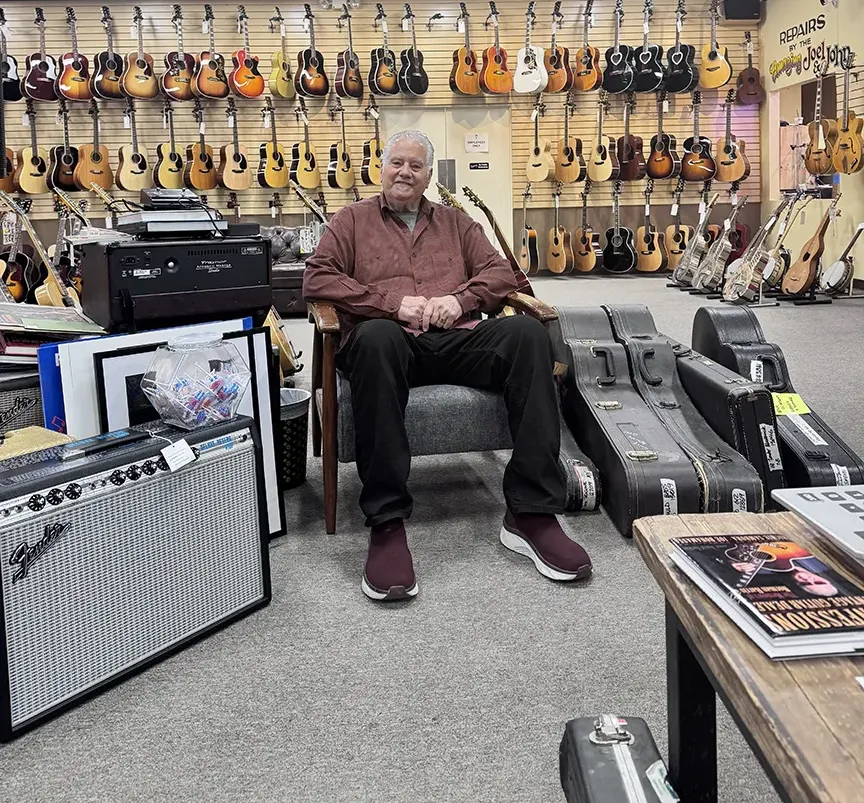
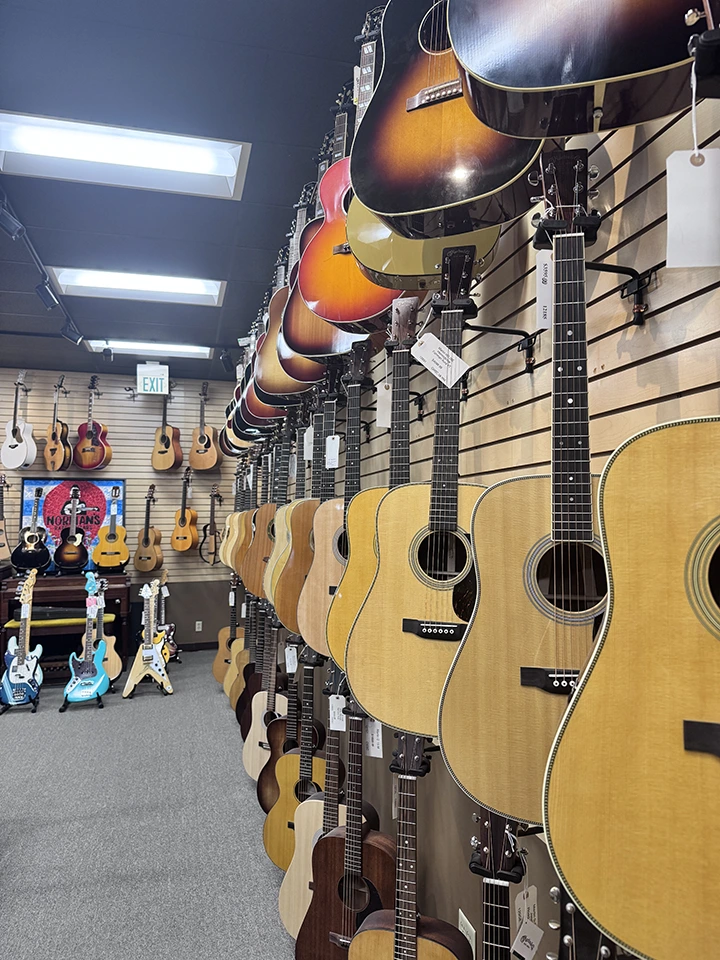
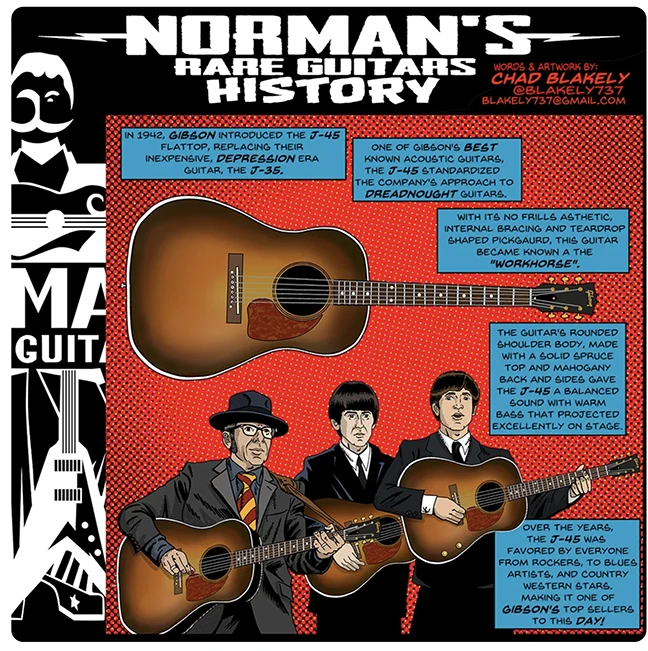
Norman Harris founded Norman’s Rare Guitars in 1975 after moving to Los Angeles to pursue a career in music. A Hammond organ player turned vintage guitar authority, Harris recognized early on the rising value of classic American instruments — Gibsons, Fenders, Martins, and Rickenbackers — at a time when few others did. What began as a passion project grew into one of the world’s most respected vintage guitar shops, attracting artists such as George Harrison, Tom Petty, and Joe Bonamassa.
Today, Norman’s Rare Guitars is not only a global destination for collectors and pros, but also a platform for discovering young talent — with thousands of performance videos that have helped launch emerging artists into the spotlight.
We sat down with Norm to talk history, music, and the future of the guitar.
SoCal:
If you had to pick one for life on a desert island — lead guitar, bass, or piano?
Norm:
For me, it wouldn’t be lead guitar. The Hammond organ was my main instrument, and piano as well. Bass is kind of my second instrument. I played bass with a band here in L.A. for a couple of years called King Cotton. We used to play in Santa Monica — on Rose Street, I think. It was so long ago.
I was mainly the keyboard player, but our bass player got a better-paying gig and left. We had a contract, so I said, “I’ve never played bass on a gig before, but I know the chord changes and what not to do. I’ll stay out of the way.” It was an eight- or nine-piece R&B band, and I ended up playing bass for two years.
SoCal:
Are younger people still interested in guitars in this artificial intelligence era?
Norm:
A few years ago, someone predicted the demise of the guitar because you don’t see as many guitars at the Grammys or American Music Awards. But a lot of that music is still written on guitar.
There’s strong interest — not only from young men, but increasingly from young women. That’s been great to see.
SoCal:
Has anyone ever just walked in and amazed everyone?
Norm:
Marcus King was our first viral video. There’s also a young man named Saxon Wise. In my opinion, he’s the Mozart of our time. He’s beyond incredible — not just flashy tricks, but completely musical.
He’s played with Jackson Browne and others he met through the store. Tal Wilkenfeld, who played bass with Jeff Beck, heard him here and introduced him to more people. He’s been around the block now.
SoCal:
You’ve been featured in a documentary, written a book — you’re an icon.
Norm:
An icon?
SoCal:
You are. No doubt.
Norm:
I’m grateful I turned a hobby into a business. I came out here to be a musician and went to Plan B — and it worked out. I’ve been in the center of so much music and have met and worked with incredible musicians. I’ve worked hard, but there’s also luck — being in the right place at the right time.
SoCal:
In January, the company was purchased.
Norm:
It’s called TNAG Global — The North American Guitar Company. Their main office is in England, and they own Carter Vintage Guitars in Nashville. We’d been talking for about four years.
At my age, and after some health issues I discussed in the documentary, I had to think about my employees and my family. If something happened to me and there wasn’t a plan, it would be chaos. These employees are like my kids. I owe it to them to make sure it’s a smooth transition. If something happened, we could open the next day.
SoCal:
Are there changes under the new ownership?
Norm:
They do more consignment than I did, and they have one of the lowest consignment rates in the business — around 15 percent, sometimes a little more or less depending on the instrument. Many stores take 25 to 35 percent. Auctions can be 35 percent or more when you factor in buyer and seller fees.
We also have the money to buy outright. If someone needs cash quickly — roof repairs, health issues, whatever it may be — we can pay a fair price. But if they can wait, consignment often brings more.
SoCal:
Have guitar styles changed?
Norm:
Styles shift, but there’s good music and bad music. Some artists are reviving blues, blues rock, country, and folk. We have Jonathan Stout, probably the greatest ’30s swing guitarist in the world.
We’ve posted nearly 10,000 times, with over 6,000 videos, promoting young talent and seasoned players who deserve more exposure. If we can help their careers, help them get bookings, that’s part of the mission.
I’m also involved with The Midnight Mission. We’ve done about 10 shows for them. Tom Petty played three times. Don Felder, Bobby Caldwell — musicians I’ve worked with and admire.
SoCal:
Is it really a sin to play “Stairway to Heaven” in a guitar store?
Norm:
No, we just joke about it. At one point every kid who came in played “Stairway.” It’s a great song — and for many, it’s the goal.
When I opened the store, it was Clapton, Jeff Beck, Jimmy Page. Now it’s Joe Bonamassa, John Mayer, and many others. Every generation has its heroes.
SoCal:
Has the guitar evolved?
Norm:
When I started, pro-quality guitars like Gibson, Fender, Martin, and Rickenbacker were exceptional. Student guitars were almost unplayable. There was a huge gap.
Now companies have reissued classic designs and improved quality across the board. Research and development keeps inventing new models, but people still gravitate to the originals. You can play any style on any good guitar.
SoCal:
Favorite chord?
Norm:
I love R&B and soul — major sevenths, major ninths, sweet soul harmonies.
Our Spotify playlist is about 10 and a half hours long. Some of it is obscure, but all of it is great. There’s Little Milton, Howard Tate, New Orleans soul, Chicago soul, Miami R&B, ska influences, Richard Berry, Jesse Belvin.
Bobby Womack before he was solo, with The Valentinos. These are deep cuts. I always appreciate when a band digs deeper instead of covering the obvious tune.
SoCal:
What would you want as your final song?
Norm:
That Spotify list means a lot to me. Music moves in cycles. Bell bottoms go out, then come back. Hopefully the best music rises to the top again.
There’s an artist from Miami I love — Little Beaver, Willie Hale. When I was young, I stumbled onto an R&B station and fell in love with that sound. It shaped me.
It might not resonate with everyone, but for those who appreciate that style, there’s something special there.