Understanding A New Wave Of Aromatherapy: Caftari Candles

Understanding A New Wave Of Aromatherapy: Caftari Candles

Gone are the days of mom’s old aromatherapy practices. Oils and sprays were nice, but what if the trusty candle did the trick in a new way?

In the latest breakthrough, Neuroscents – scents created to elicit emotional responses that are neurologically backed – are carving a new lane with Caftari. Caftari uses science backed formulas to elevate one’s well being, with a mission to help individuals lead happier and healthier lives through the use of fragrance. Caftari’s science-backed formulas are carefully crafted to support joyfulness and rejuvenation through Neuroscents, not just making spaces smell good, but leaving you feeling good, too!

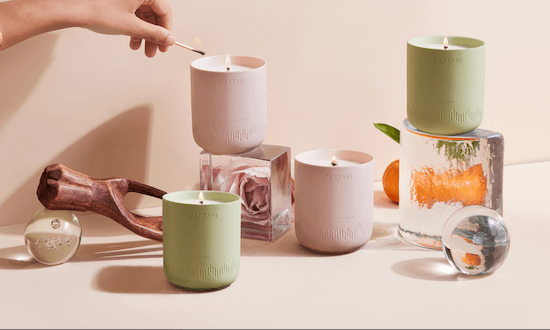
This past November, Caftari entered the home + fragrance market with the launch of two mindfully scented candles – Elixir and DolceCaftari is elevating fragrance through science & wellness – by creating daily moments of mindfulness with scents designed to modulate brain waves and in moments of bliss, relief, and deep relaxation through science-backed formulations. Caftari candles are curated in a luxury ceramic vessel, and etched with the pattern of the specific brainwave that the candle hones in on.

Caftari’s leading candles are broken down below:

Dolce Far Niente: For a Glimmer of Bliss – Experience the Italian adage at home.
With its romantic and warm floral profile, this blend incorporates rose oil to encourage the release of serotonin, which promotes happiness and is present when we are daydreaming or practicing mindfulness.

Elixir:For a Bright Awakening – Reawaken your mind and body any time of day.
With its citrusy profile & purposeful aroma to light and encourage a sense of revival, this blend features bergamot essential oil, which promotes the release of endorphins, a neurotransmitter also known as the feel-good chemical.

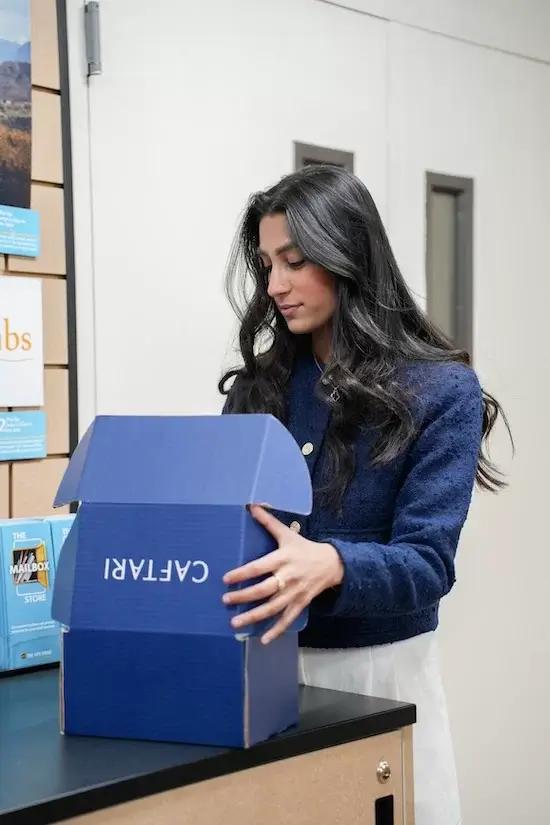
Caftari’s Founder, Shreya Aggarwal, was born in India and immigrated to the US as a child, with her earliest memories linked to fragrance notes like her mom’s rose-scented hair oil & dad’s perfumed talc powder. Aggarwal always thought she’d major in Neuroscience, but eventually pivoted to pursue her passion for fragrance as a buyer in the industry. Throughout her career, Shreya noticed a lack of results driven, neuroscience-backed fragrance products created to address overall mental health and wellbeing. After suffering from her own anxiety and trying numerous different methods to tackle it, Aggarwal paralleled her love of fragrance and passion for neuroscience to create solutions with Caftari for her own needs and the similar needs of others.
To help breakdown how neuroscents work and enforce Caftari’s message and goal, they partnered with PhD and MIT Professor, Dr. Tara Swart, who answered a few of our questions. If you’re looking for insight into how neurotransmitters work on our brains, and more, keep reading!

Q&A With Dr. Tara Swart

Hi Dr. Swart! Caftari is not just your typical candle company, but something deeper. Can you explain how scent can modulate brain waves and impact mental wellbeing?

Dr. Swart: Caftari candles contain essential oils of sufficient potency, and proven by science to have beneficial effects on our mental state. These are known as neuroscents because they travel via the olfactory nerve to the memory and emotion centres of the brain evoking moods that correlate with the release of certain neurotransmitters and the relevant brain wave states.

What specific scientific principles support the idea of fragrances like rose oil and bergamot essential oil influencing neurotransmitter release?

Dr. Swart: Rose essential oil heightens the release of serotonin—a neurotransmitter renowned for its happiness inducing effects. Serotonin, the architect of alpha brainwaves, is released during moments of daydreaming or mindfulness, creating an ambiance of tranquility and joy. The Dolce Far Niente candle contains rose oil as a major ingredient. The Elixir candle’s fragrance blend includes bergamot and helps uplift mood. Bergamot essential oil stimulates the release of endorphins—the brain’s feel-good chemicals. Endorphins correlate with gamma brainwaves, and accompany heightened states of awareness.

How do different neurotransmitters, such as serotonin and endorphins, interact with brain waves, and how might this interaction be influenced by fragrance?

Dr. Swart: The release of various neurotransmitters leads to the brain producing the associated brain wave patterns. Molecules of the scents interact with the olfactory nerve through the nose and lead to neurotransmitter release into synapses in the memory and emotion centres of the brain which are deep in the brain behind the bridge of the nose and where the olfactory nerve travels to.

Do individual differences, such as genetics or personal scent preferences affect the response to neuroscented products, or does nearly everyone have the same brain-chemistry response?

Dr. Swart: The actual chemical response is broadly the same (particularly with natural and floral scents), unless there are particular memories that trigger a stress response, but the emotional response or memory induced will vary from individual to individual.

Can neuroscented products like these candles be used as complementary therapies alongside traditional treatments for anxiety or mood disorders?

Dr. Swart: They can be used as an additional element to creating a pleasant and calming environment but this cannot be compared to the efficacy of psychological therapy for actual mental health disorders. However, olfactory enrichment (being exposed to a variety of smells throughout the day) can help with cognition as we age.

In what ways might the field of neuroscience further contribute to the development of fragrance products aimed at improving mental health and wellbeing?

Dr. Swart: Further research into neuroaesthetics (the health, mental health and longevity benefits of beholding and creating beauty), the benefits of nature on well-being, and olfactory enrichment on neuroplasticity (the ability of the brain to grow and change throughout life) are key areas.

High Rise Art?

High Rise Art?

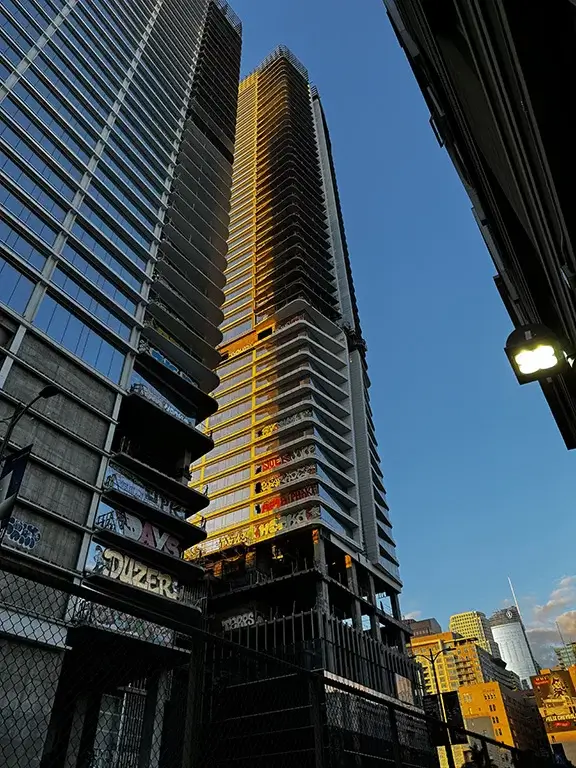
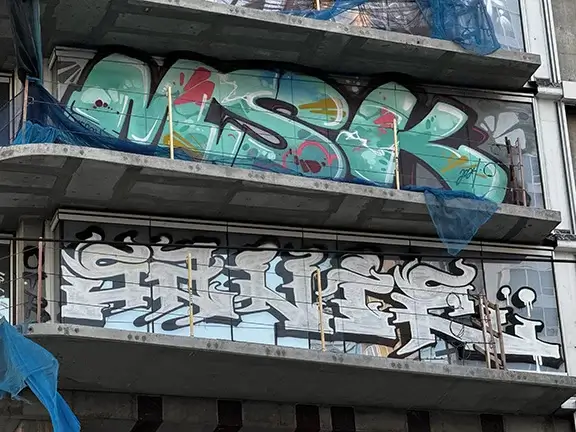
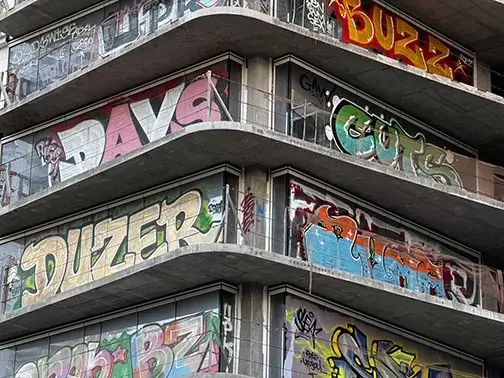
In 2011, MOCA presented a show called “Art in the Streets”, it was the first major U.S. museum survey of graffiti and street art. It was controversial and provoked an academic debate about the nature of graffiti. Today, one need only look up—downtown, South Park, for the moment, home to nearly 27 floors of typographical messages commonly known as graffiti. Derived from the Italian word graffio(“scratch”), graffiti (“incised inscriptions,” plural but often used as singular) has a long history. The graffiti seen here may be short lived as the the Los Angeles City Council.The buildings are part of the Oceanwide Plaza which was meant to be a $1 billion real estate project in downtown L.A., but it’s been empty since 2019. According to the Los Angeles Times’ Summer Lin and Robert Gauthier, the plan was to build three neighboring towers that would serve as luxury condominiums and apartments alongside hotel and retail space. However, construction stopped when the Beijing-based developer backing the project ran out of funds.The abandoned buildings have been an eyesore for locals, and currently the cause of great debate about just what graffiti is. The building looks like an electrical panel with dull cement gray exteriors that have sat for five years, and at some point provided an opportunity for local graffiti artists to decorate the building. Currently, the Los Angeles City Council has voted to invoke the owners to clean up the “mess” of they will and send a bill.

Graffiti can be found throughout the city, from the streets of downtown Los Angeles to the neighborhoods of East LA. Here are some key points about graffiti in Los Angeles:

  1. Historical Roots: Graffiti has a long history in Los Angeles, dating back to the 1960s and 1970s when it emerged as a form of expression among marginalized communities. The city played a significant role in the development of graffiti as an art form.
  2. Legal and Illegal Graffiti: While some graffiti is illegal and considered vandalism, there are designated areas and public spaces where street art is legal and even encouraged. The city has a complex relationship with graffiti, acknowledging its artistic value in certain contexts while also enforcing laws against illegal tagging.
  3. Venice Beach Walls: Venice Beach is known for its legal graffiti walls, where artists can freely express themselves without fear of legal repercussions. These walls attract both local and international graffiti artists, contributing to the vibrant street art culture of the city.
  4. Murals and Street Art Festivals: Los Angeles hosts various street art festivals and mural projects that bring together artists to create large-scale public artworks. The city has numerous murals that showcase a wide range of styles and themes, often reflecting the cultural diversity of the area.
  5. Melrose Avenue: Melrose Avenue in West Hollywood is famous for its street art scene. The walls of buildings along this iconic street often feature colorful murals and graffiti pieces, creating an outdoor gallery that reflects the trendy and artistic atmosphere of the neighborhood.
  6. Downtown Arts District: The Arts District in downtown Los Angeles is another hotspot for street art and graffiti. Former industrial buildings and warehouses in this area have been transformed into galleries and studios, attracting artists who contribute to the urban art landscape.
  7. Political and Social Commentary: Graffiti in Los Angeles often serves as a platform for political and social commentary. Artists use their work to address issues such as gentrification, inequality, and cultural identity, providing a visual voice for marginalized communities.

It’s important to note that opinions on graffiti vary, and while some view it as a form of artistic expression, others see it as a form of vandalism. The city’s approach to graffiti continues to evolve, with efforts to balance artistic freedom with the need to maintain public spaces.


Smallhold Launches New Mushroom Pesto

Smallhold Launches New Mushroom Pesto

Smallhold began delivering locally grown, USDA Certified Organic specialty mushrooms to Southern California in its first West Coast expansion, alongside existing farms in Brooklyn and Austin in May of 2022. Then, a little over a year later, the sustainability-focused company started a new first, with the launch of a new product: a Mushroom Rub Trio.

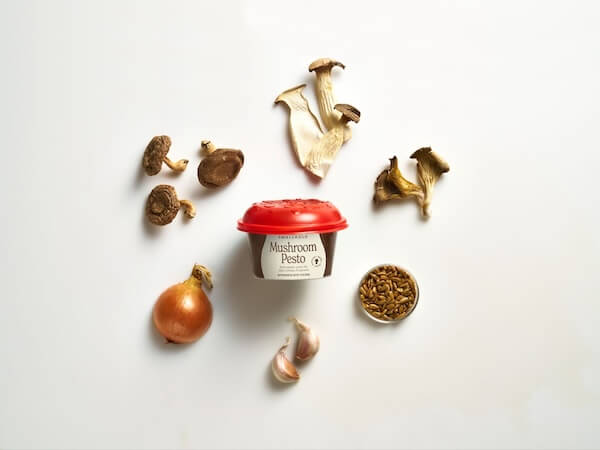
Now, the company has launched a Mushroom Pesto, stepping up their culinary offering even more! Suitable as a spread, sauce, filling, and so much more, this new umami-packed offering reimagines pesto, ultimately eliminating many of the ingredients that are a headache for those with allergies and dietary restrictions.

Some highlights of the Mushroom Pesto include:

  • Made with upcycled, Organic Mushrooms
  • Free of Big 9 Allergens
  • Clean Label
  • Dairy-Free
  • Certified Plastic Neutral

Smallhold earned their B Corp Certification last year—marking a significant milestone in the company’s dedication to addressing our planet’s greatest challenges. The number of B Corp businesses is over 6,000 long and growing, with Smallhold joining the ranks of Ben & Jerry’s, Patagonia, and other vocal companies who don’t shy away from their stances on social and environmental standards. Smallhold voluntarily upholds rigorous social and environmental performance standards, fostering accountability and transparency. The company will measure and manage its impact on its workforce, local communities, and the environment with the same level of dedication and scrutiny that it applies to its financial performance.

Smallhold’s Mushroom Pesto is available to purchase online, in addition to their entire product lineup. Their other products are also available at Whole Foods and Sprouts nationwide.

About Smallhold

Smallhold is a growing network of organic mushroom farms with operations in Brooklyn, Austin, Los Angeles, and beyond. Named one of Fast Company’s 2023 Most Innovative Companies, Smallhold is upending the traditional farming model. By operating urban farms in strategic regions, growing mushrooms on byproducts from other industries, and exclusively using compostable cardboard packaging, Smallhold reduces overall food miles traveled, improves product quality, and extends shelf life, all while drastically reducing carbon footprint, food waste, and plastic usage.

Social Media Auto Publish Powered By : XYZScripts.com