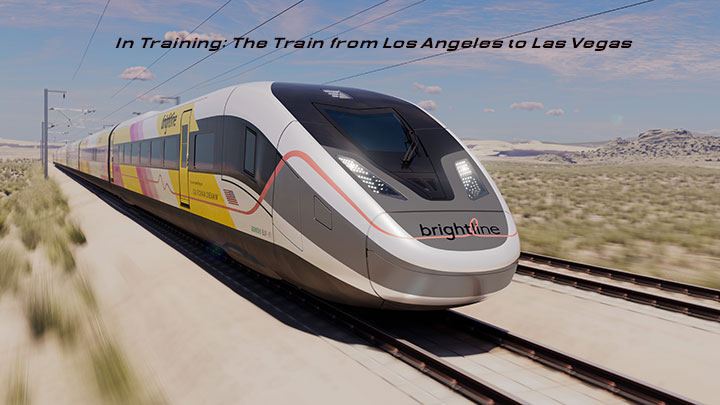
The Train to La Vegas: An Update

The Train to La Vegas: An Update
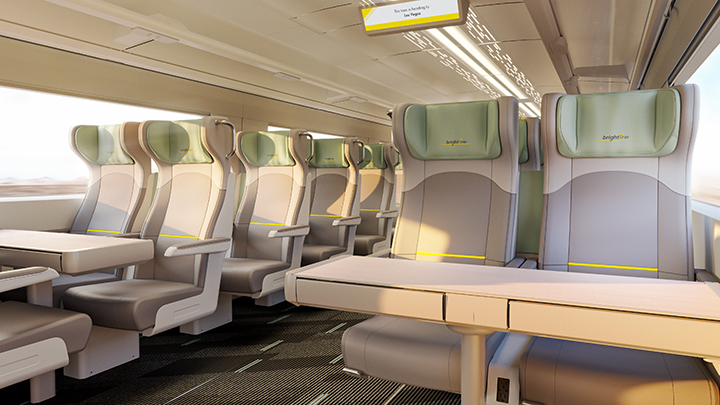
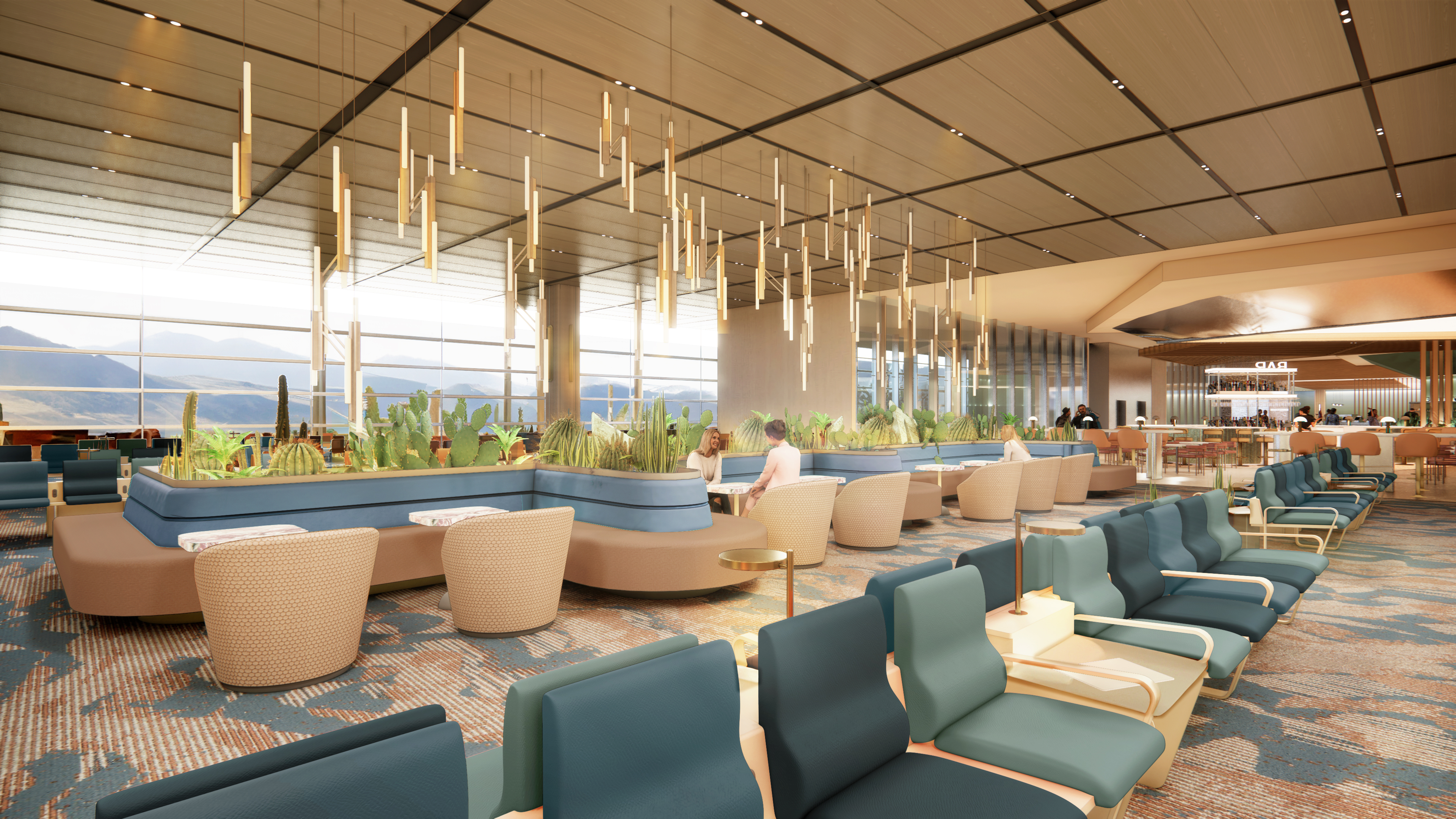
Today, nearly 50 million annual trips occur between Los Angeles and Las Vegas – over 85% of them by automobile – a trip which is unpredictable, unreliable and challenged by congestion. Brightline West expects to serve 9 million one-way passengers annually.
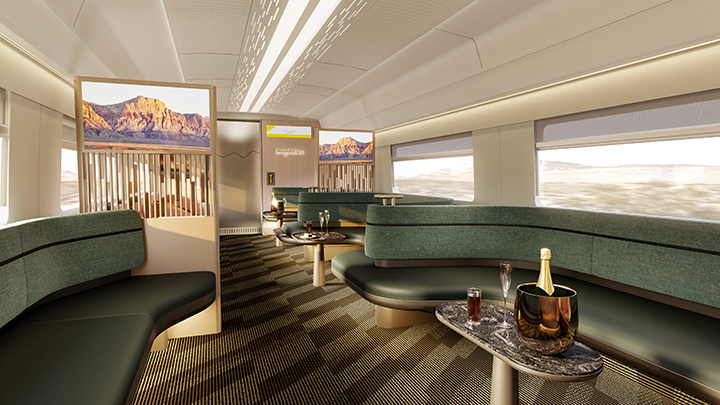
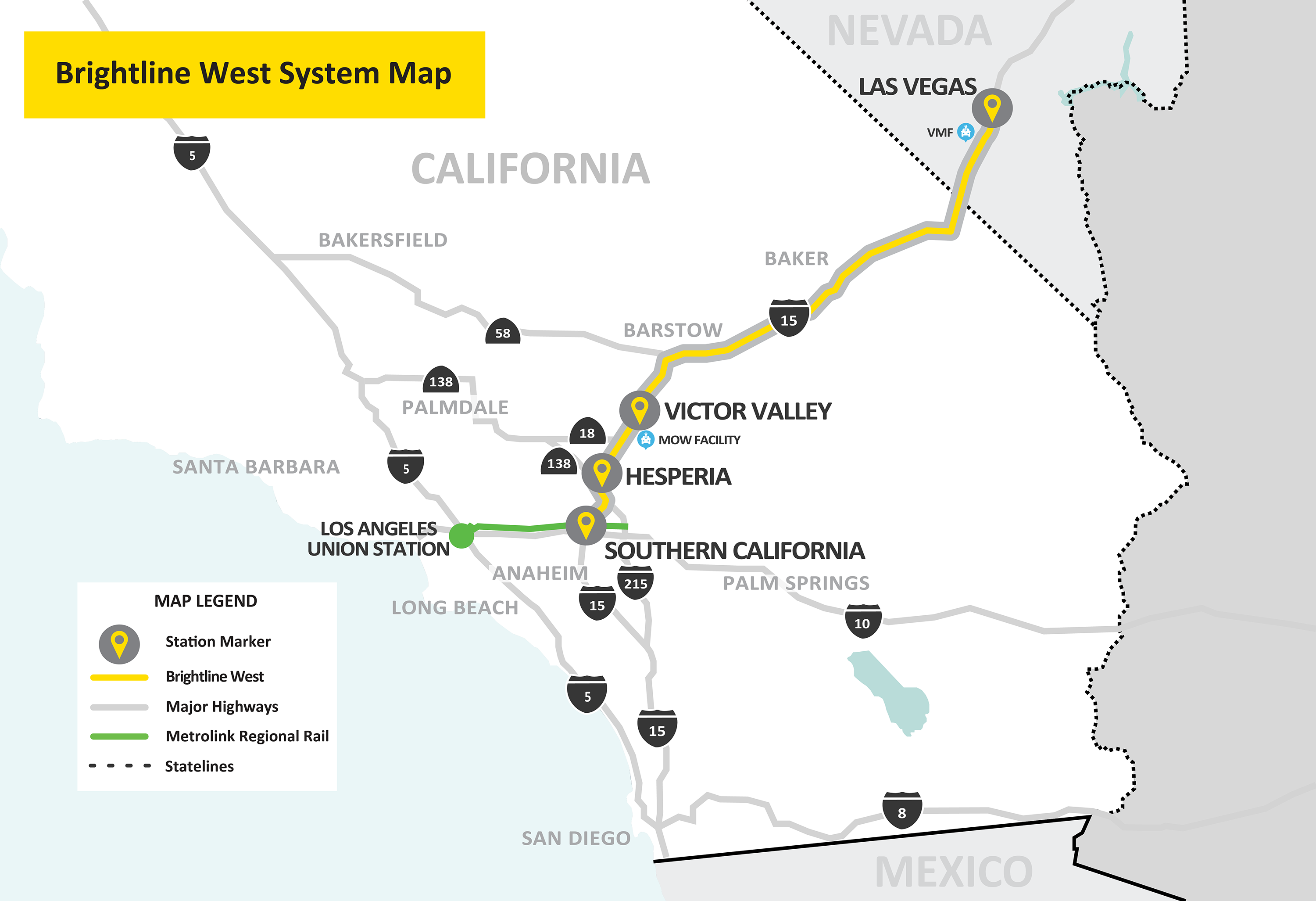
The idea of a fast, reliable rail link between Southern California and Las Vegas has been kicking around for decades, resurfacing every time I-15 turns into a weekend parking lot. What’s different now is that the project is no longer a speculative concept or a string of glossy renderings. The line now has a defined route, named stations, major funding commitments in place, and years of field work already underway along the corridor.

The project most people mean when they say “the train to Vegas” is Brightline West, a privately led high-speed rail line planned to connect Las Vegas with the Los Angeles region by running largely in the median of Interstate 15. The route is designed to be about 218 miles long, built for all-electric trains capable of speeds above 200 miles per hour. The headline promise has always been simple: turn a drive that can swing from four hours to “who knows” into a trip measured in roughly two hours, with a schedule that doesn’t depend on traffic, holiday gridlock, or the weather.

One of the biggest points of confusion is the “Los Angeles” part of the route. The southern terminus is planned for Rancho Cucamonga, not downtown Los Angeles. That choice is strategic: building straight into the most complex parts of the LA Basin would add time, cost, land constraints, and political headaches. Instead, the plan is to plug into an existing regional rail hub so travelers can reach the station via Metrolink and other local connections, then board the high-speed service for the desert run. For Angelenos, that means the trip becomes two steps: getting to Rancho Cucamonga, then taking the high-speed train to Las Vegas. The total door-to-door time will depend heavily on how seamless the local connection is and how frequently trains run.

Las Vegas, meanwhile, is positioned to be a more straightforward arrival experience. The planned station site is south of the Strip on Las Vegas Boulevard, intended to function as a purpose-built gateway for visitors, with space designed for the kind of passenger flow Vegas is used to handling. In between, the line is expected to include stations in the High Desert, with Apple Valley and Hesperia commonly cited as key stops. The point isn’t just to serve Vegas tourists; it’s also to build a spine of mobility through a corridor where growth has been strong and where I-15 is often the only practical option.

A major milestone arrived when the project secured a multibillion-dollar federal grant agreement through a partnership with the Nevada Department of Transportation. That grant is aimed at final design and construction and has helped shift the project from aspiration to execution. The financing plan also leans on private capital, including federal private-activity bond capacity, a structure often used to fund large infrastructure that has a defined revenue model. The mix matters because it affects how quickly the project can move and how insulated it is from the start-stop cycles that have defined many American megaprojects.

Groundbreaking ceremonies in 2024 marked the public start of construction, but the more telling signs of progress have been the less glamorous ones: surveys, geotechnical work, utility investigations, and on-the-ground field activity in both Nevada and California. This kind of work is where a project either proves it can navigate reality or gets swallowed by it. The corridor may look simple on a map—follow I-15, keep it straight—but the details are complicated: bridges, interchanges, drainage, utilities, soil conditions, maintenance facility needs, construction staging, safety requirements, and the constant challenge of doing heavy work adjacent to one of the busiest travel highways in the West.

“The schedule has also become clearer—and less dreamy. For years, the unofficial hype line was “in time for the Olympics,” with the 2028 Summer Games in Los Angeles serving as a symbolic deadline. The more recent planning has shifted expectations toward the end of the decade, with late 2029 now widely associated with the projected start of service.”

The schedule has also become clearer—and less dreamy. For years, the unofficial hype line was “in time for the Olympics,” with the 2028 Summer Games in Los Angeles serving as a symbolic deadline. The more recent planning has shifted expectations toward the end of the decade, with late 2029 now widely associated with the projected start of service. That change doesn’t necessarily signal trouble; it reflects the reality of building a high-speed rail system from scratch in the U.S., with new stations, new track, new signaling, new power systems, extensive testing, and the necessary approvals layered on top. The closer a project gets to real construction, the more honest the timeline tends to become.

There’s also an environmental story running underneath the transportation story. A line cutting across the Mojave Desert raises unavoidable questions about habitat, wildlife movement, and long-term impacts. Plans for wildlife overcrossings and other mitigation measures have been part of the project’s development, aimed at reducing the barrier effect that rail infrastructure can create for species that already navigate a fragmented landscape. This is not just an add-on; it’s the kind of requirement that can shape design, budget, and construction sequencing.

So what is the “update” right now? The most meaningful update is that the project appears to be in the grinding middle stage between announcement and arrival—the stage where timelines get revised, financing gets finalized, construction plans get tested in the field, and the public begins to see more than press conferences. The late-2029 target is a practical marker to watch, but the more immediate tells will be visible construction milestones in 2026 and 2027: sustained heavy work along the corridor, station progress that’s impossible to miss, and major procurement and testing steps for the trains themselves.

For Southern California travelers, the eventual success of the service will be judged on a few simple questions. How easy is it to get to Rancho Cucamonga without a car? How frequent are departures on peak weekends? What does the pricing look like compared to driving, flying, or taking a bus? How smooth is the last mile in Las Vegas? If those pieces land, the train becomes more than a novelty—it becomes a new default for one of the most traveled leisure corridors in the region.

For now, the clearest takeaway is that the Vegas train is no longer a “maybe someday” concept. It’s a real infrastructure project with real constraints, real funding, and a real timeline that has settled into the end-of-decade range. The next year or two will determine whether it keeps momentum through the hardest part: turning plans into track, stations, systems, and a service that can run safely at true high-speed—day after day, weekend after weekend—on the one route where demand has never been the problem.


Facebooktwitterlinkedininstagramflickrfoursquaremail
A New Diner in Town: Tesla

A New Diner in Town: Tesla

When Tesla Diner opened on July 21, 2025, it drew massive crowds eager to see a “Grease meets The Jetsons” fantasy brought to life. Wrapped in gleaming stainless steel, the two-story saucer-shaped diner—designed by Stantec—boasts over 250 seats75–80 V4 Supercharger stalls, and two massive 66-foot movie screens, transforming mundane charging into entertainment and spectacle

Inside, the design is pure retro-futurism: neon-lit booths, roller-skating servers, Cybertruck-themed packaging, and even a popcorn-serving Optimus robot. Guests can order via kiosks or directly through their Tesla’s touchscreen, and some food items arrived theatrically in custom boxes .

The Initial Menu: Ambitious and Eclectic

Helmed by Chef Eric Greenspan (with Bill Chait), the original menu was an expansive, diner-classic mash-up with modern flair:

  • Smash-style Tesla Burger with “Electric Sauce”
  • Chicken & wafflestuna meltshot dogshand-spun shakesCharged Sodas (with caffeine), biscuits with red chorizo gravy, and even soft-servepie shakes, and pastries

The tone was playful and proud—fries with beef tallow, sourced ingredients, and Cybertruck boxes to underscore the brand experience

Menu Trims: A Reality Check in August

Just weeks in, the diner dramatically reduced its menu, citing “unprecedented demand” as the reason. As of mid-August:

  • The menu now consists of only five sandwichesa burgera hot dogfriesa cup of chilipecan pie, shakes, and soft drinks.
  • Popular items like Epic Baconbiscuits and gravyveggie burgermarket saladclub sandwichchocolate chip cookiesShirley Temple, and Creamsicles have all been dropped.
  • The once-promised all-day breakfast is now strictly limited to morning hours

Additionally, the claim of being a 24/7 restaurant now only holds true for Tesla (and other EV) drivers charging between midnight and 6 a.m., while access for walk-in customers has been limited

Final Verdict: Atmosphere Over Culinary Consistency

Highlights:

  • Unmatched ambiance: Truly entertaining and visually compelling—robots, retro servers, rooftop views, synchronized movie screens, and a buzz-filled vibe
  • Brand immersion: From Cybertruck boxes to in-car ordering, every detail reinforces Tesla’s identity .
  • Novelty appeal: For fans of Musk, EV culture, or kitschy experiences, this is a must-see .

Challenges:

  • Taste vs. hype: Food quality and availability were inconsistent—some diners found it enjoyable, while others were disappointed
  • Long waits and supply chaos: Queues, sold-out items, and operational glitches marred the experience—though many stayed in good spirits (“It is what it is”)
  • Menu cutbacks: A tangled initial menu was swiftly replaced by a stripped-down selection, signaling overreach and under-delivery .
  • Access limitations: Late-night service is now restricted, limiting the diner’s 24/7 promise to EV drivers only

Is it really new?

Tesla Diner is less about pioneering a next-gen culinary destination and more about selling a dining experience—part museum, part charging station, part sci-fi theater. If you’re drawn in by spectacle, nostalgia, and EV aesthetics, it’s a worthy stop. But if you’re seeking reliably delicious food with fully stocked menus and quick service, you might want to wait and see how the operation evolves.


AI Overview
 
I Waited in Line Two Hours for a Tesla Burger—Was It Worth It?

The Tesla Diner is located at 7001 Santa Monica Blvd, West Hollywood, California, 90038,

Facebooktwitterlinkedininstagramflickrfoursquaremail
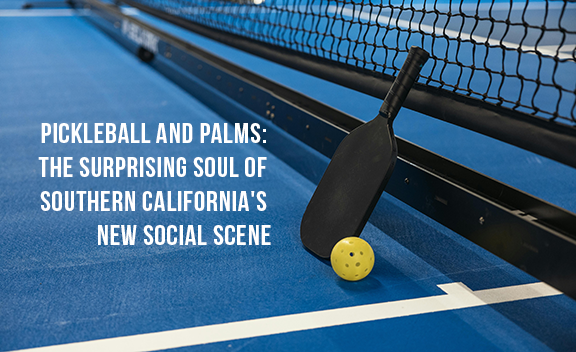
Pickleball and Palms: The Surprising Soul of Southern California’s New Social Scene

Pickleball and Palms: The Surprising Soul of Southern California’s New Social Scene

Once the sun begins its slow descent behind the palms, a new kind of SoCal nightlife lights up—not in clubs or cocktail lounges, but on neighborhood courts with paddle in hand and sneakers squeaking across freshly painted lines. Pickleball, a once-niche paddle sport, has become the cultural glue binding generations in Southern California—from Silverlake hipsters and Palm Springs retirees to Venice techies and Encinitas yogis.

The game—part tennis, part ping-pong, and all attitude—has transformed from a casual backyard pastime into a full-blown lifestyle. And in true SoCal fashion, it’s not just about the sport—it’s about the scene.

“We started playing just to get outside,” says Reina Salazar, a 34-year-old creative director who now co-hosts a weekly queer pickleball night in Echo Park. “But it quickly became a ritual. It’s where we connect, flirt, vent, and even network. It’s like brunch, but sweatier.”

Cities like Long Beach and Santa Monica are investing in permanent pickleball courts, and local designers are launching fashion-forward pickleball apparel lines, some with SPF 50 sun protection and others with cheeky slogans like “Dink Responsibly.” There are tournaments with craft beer sponsors, DJ sets at night games, and Instagram accounts dedicated to SoCal pickleball crushes. You can’t walk through a weekend farmer’s market without hearing someone mention “paddles” in the same sentence as “recovery smoothie.”

Critics argue that the sport is too noisy or a trend that’s “ruining tennis,” but pickleball seems to be redefining community in a region often accused of isolation and car-centric disconnection.

“It’s the most un-L.A. thing that’s ever happened to L.A.,” laughs former soap actor Brent Vega, who runs a “Sober Sundays” pickleball club in Burbank. “It’s real people, outdoors, no filter. Just paddles and good vibes.”

As temperatures climb and daylight lingers, don’t be surprised to find your neighbors—sweaty, smiling, and competitive—gathered on local courts until dusk. In the land of palm trees and reinvention, Southern California’s newest cultural movement might just be the sound of a plastic ball popping across the net.


Pickleball Courts in Southern California

Mar Vista Recreation Center
A well-loved Westside spot with casual community games.
 https://www.laparks.org/reccenter/mar-vista
11430 Woodbine St, Los Angeles, CA 90066

Desert Pickleball Club – Palm Springs
LGBTQ+ inclusive group with drop-in games in the desert.
 https://www.desertpickleball.com
Sunrise Park Courts – 480 S Sunrise Way, Palm Springs, CA 92262

Santa Monica Beach Pickleball Courts
Beautiful ocean-side setting with consistent community play.
 https://www.santamonica.gov/places/pickleball-courts-north-beach
North Beach Courts, 1200 Palisades Beach Rd, Santa Monica, CA 90401

El Segundo Pickleball Courts / PicklePunk League
A quirky, themed local league with music and costumes.
 https://www.elsegundo.org/government/departments/recreation-parks/facilities-sports/pickleball
300 E Pine Ave, El Segundo, CA 90245

Facebooktwitterlinkedininstagramflickrfoursquaremail
2025

2025

In Chinese astrology, the Snake holds a revered place among the twelve zodiac animals, symbolizing wisdom, intuition, and elegance. The Year of the Snake in 2025, beginning on January 29 and ending on February 16, 2026, marks a period associated with transformation and insight.
Historically, the Snake is seen as a powerful and enigmatic sign, deeply connected to intellect and mystery. Those born under the Snake are believed to be resourceful, contemplative, and graceful, often carrying an aura of sophistication. In the Chinese zodiac cycle, the Snake is the sixth animal, following the Dragon and preceding the Horse.

The Snake’s influence in 2025 brings opportunities for self-reflection and strategic planning. It’s a year that encourages embracing change and harnessing inner strength to achieve personal and professional growth. In Chinese culture, the Snake’s attributes often symbolize renewal, making 2025 a promising time to shed the old and welcome new beginnings.

Aligned with the Wood element in the Chinese Five Elements system for this cycle, 2025’s Year of the Wood Snake emphasizes growth, adaptability, and a nurturing approach to challenges. This combination amplifies the Snake’s wisdom with a harmonious and grounded energy, fostering a year of thoughtful progress and collaboration.

As with all zodiac years, the Year of the Snake offers lessons tied to its unique qualities, reminding us to balance caution with courage and to trust our instincts as we navigate life’s complexities.

Facebooktwitterlinkedininstagramflickrfoursquaremail
Checking-In: Graham Moore, Commercial Artist

Checking-In: Graham Moore, Commercial Artist

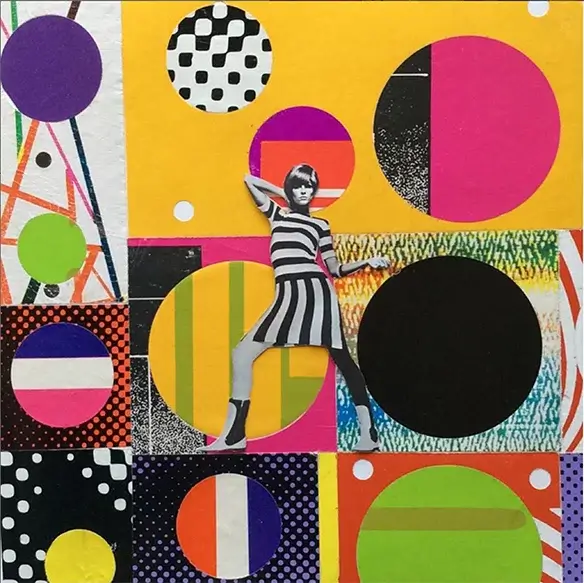
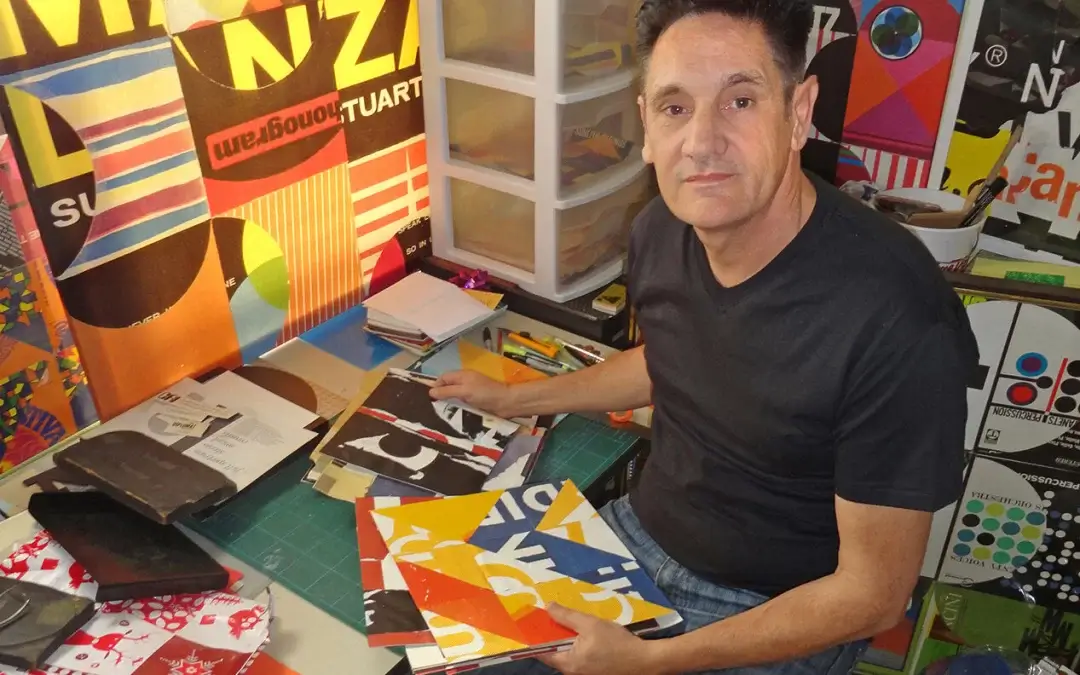
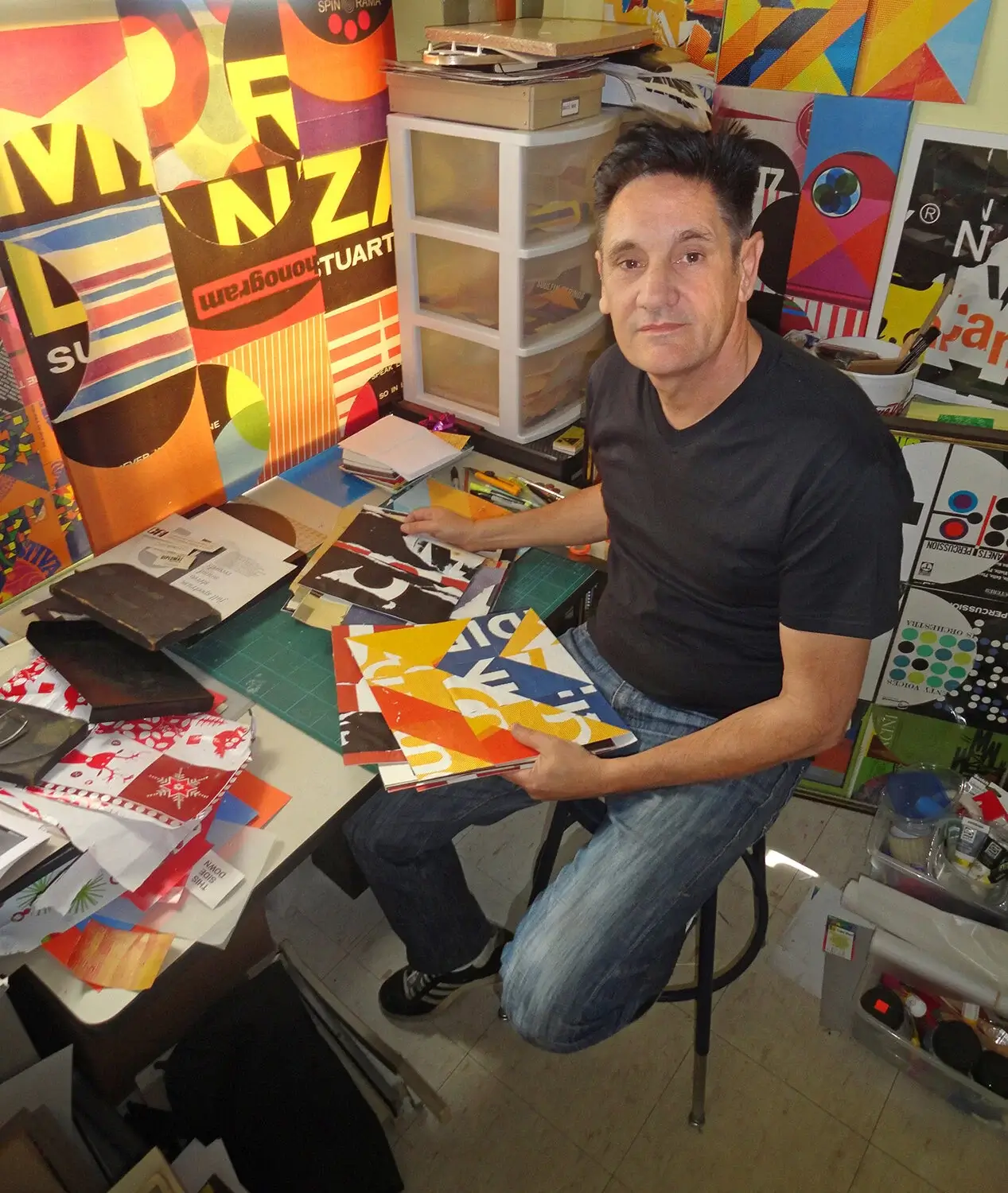
This is the first in a series of profiles about people who live and work in the SoCal area. We tap into the vast range of professions and endeavor to explore method and outcomes. We start with Graham Moore, a graphic artist born in Somerset, England, living in Los Angeles. HIs work is swinging 60’s London and Retro Americana.


HOW IT BEGAN
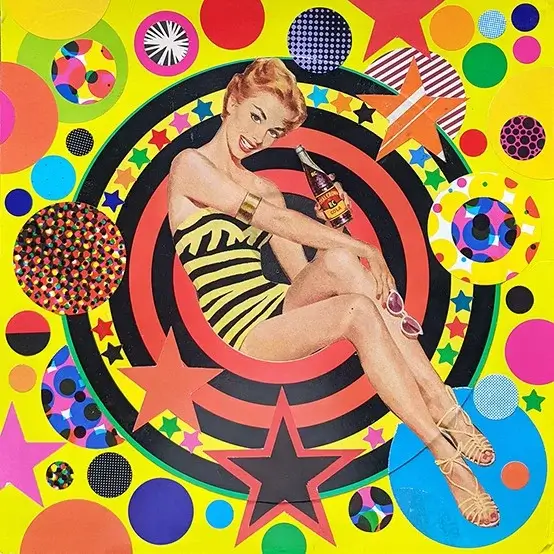
My journey started at Wimbledon school of art in London where I did my foundation studies, 3 years later graduated in Graphic Design. First job was working in a print shop in covent garden. Came over to New York in 1987, then down to Dallas, worked in a couple of design studios, them moved out to Los Angeles in 1991. Have continuously been working in the entertainment/music business/design studios/advertising agency as a graphic designer/Art Director. Was offered to teach a class at Art Center College of Design in 2003 and have been teaching as an adjunct faculty since then also at FIDM and currently at Woodbury University in Burbank. My own art started to take off in 2012, employing non-digital techniques, collage & mixed media being my process of choice. Out of many, Pop art would be my favorite art movement and that comes across in my work and most of the artists, music, fashion and style I admire are from that time period, the 1960’s. I continue to mix analog/digital techniques in both my personal and graphic design work!

What are the challenges in your profession?
It is not an easy road to tread….being a freelance designer/designer/teacher I am constantly hustling for work, looking for new clients, as an artist, be prepared for rejection, because it will happen, but not to be taken personally! Just remember that art is subjective so what one person may love, another person is not impressed! One door closes, another opens, that has been my experience! As a freelancer network, network & more networking for the next gig!

Can you explain your design thinking?
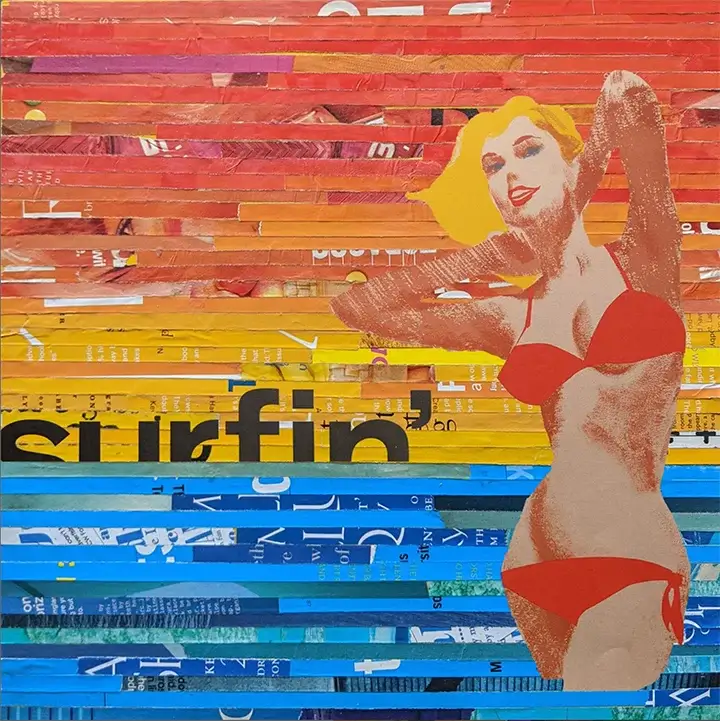
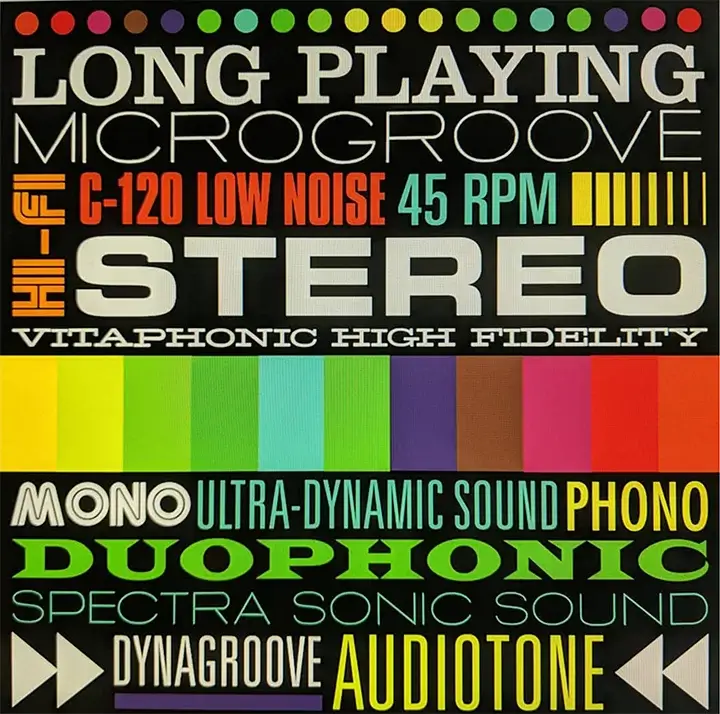
I love the clean, simple lines of mid-century modern design and the cool sounds of west coast jazz! and Blue Note jazz covers and the Abstract Classicists. I am a huge fan of the art movement, Califonia Hard-Edge. Bold lines, organic shapes, color and texture are all important ingredients that I employ in my own work. I was doing a lot of collage in my classes (art & design at Art Center and Woodbury University), always experimenting and exploring with different materials, textured papers and found imagery, etc. I had the idea to use record covers and the paper sleeves that protected 45 singles, specifically packaging from 1960’s. There is so much of it, an endless supply of material!

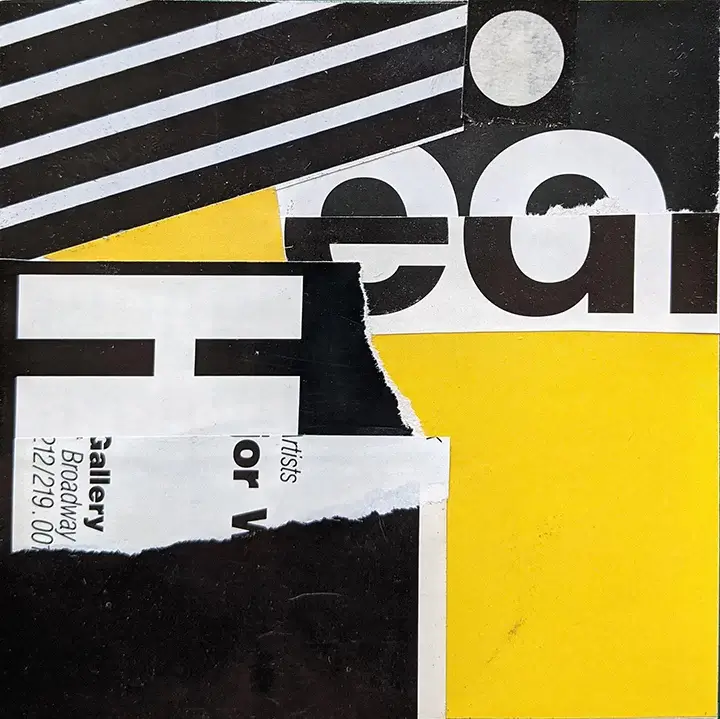
It already contained such strong use of shape, line, color and texture, (all the things by the way that I teach in my Basic elements and principles of design classes). There is something about the quality and feel of the printing from back then that cannot be rivalved! It seems ironic to me that it was the love of album cover art that made me want to pursue a career in graphic design in the first place, and here I am using it in a way I would never have dreamed of! Also, by accident, one day while working on my computer, from my living room window I was watching the clear channel guy strip down and replace some billboards. I went down and asked him what he did with the remnants and he said they just trashed it, so help yourself and through some experimentation found that there was a lot of great color, typography and texture to be had, and nice big areas of halftone dots!

My process is lots of experimentation! For instance, with the billboard pieces, I brake it down into manageable size pieces then soak it in the bathtub until I can peel it apart. The fun is always in the reveal because there are so many layers you never know what you are going to get! The record cover pieces are like a jigsaw puzzle, sometimes a piece will sit on my table for a few days, constantly moving pieces around until it feels right! There have also been instances where I have found the frame/frames first and created the piece specifically for the frame. One important factor is that I always use a square format, which relates to back to the album cover, be it 12 inch, 10 inch, 7 inch.

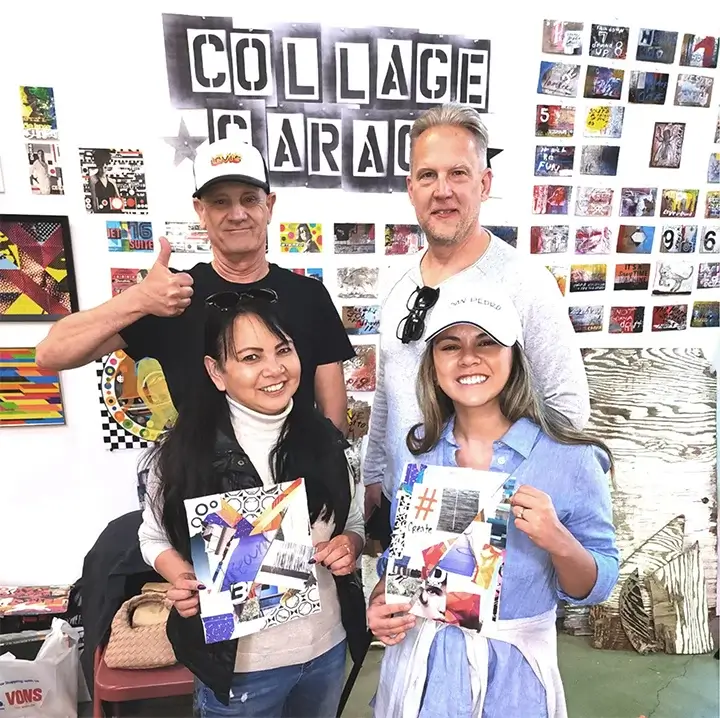
Photo, right: Jim wojtowicz and mother&daughter participates in the first Collage Garage workshop at the 1st annual recycled art fair @crafted at the port of Los Angeles in San Pedro California.  https://express.adobe.com/page/wwdfyIlaFVGWO/

For more Moore: http://www.gmoorecreative.com/

Facebooktwitterlinkedininstagramflickrfoursquaremail
Ask the Experts:Travel

Ask the Experts:Travel

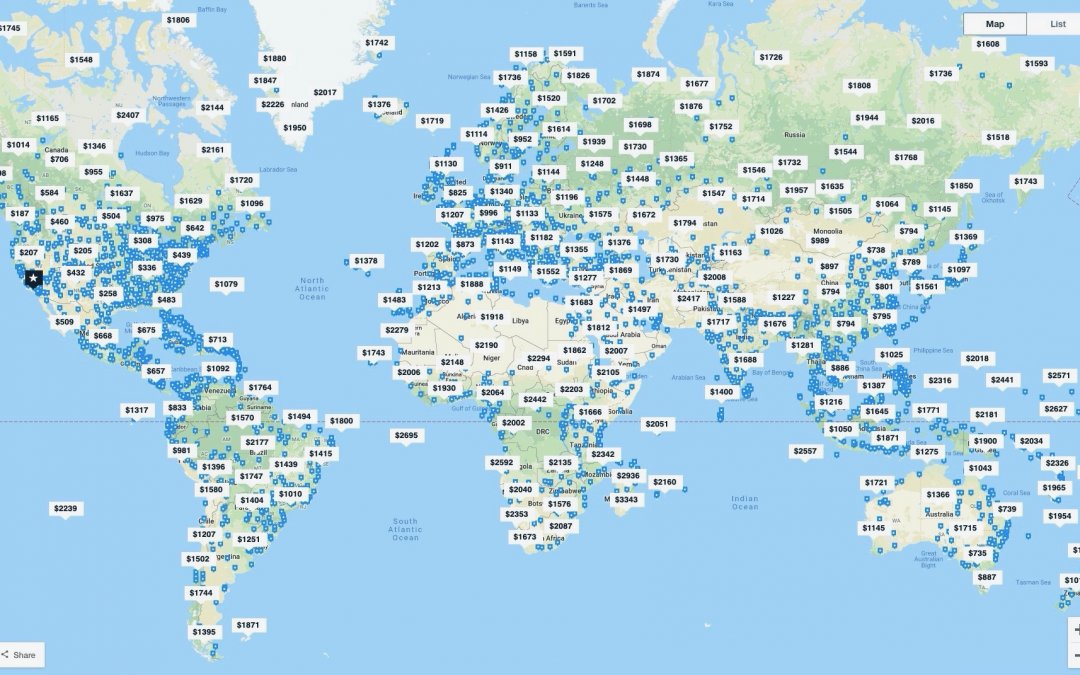
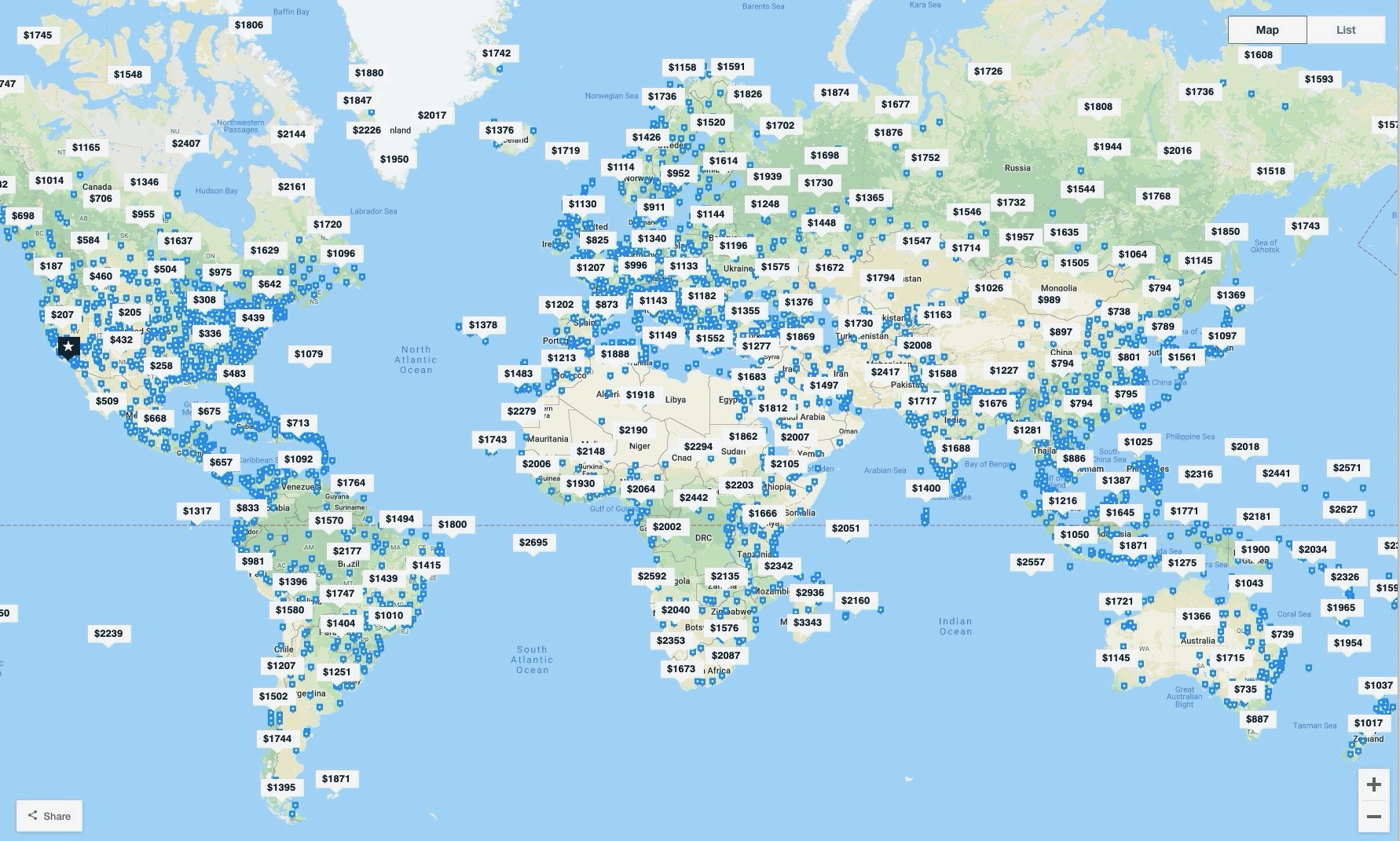
If you’re travelling with a budget in mind, KAYAK offers a great service: find locations for travel based on location and price worldwide. Here’s how it works: Go to the flight section, under “anywhere” click and you wil find explore your options with anywhere search. Click on any price and it will give you the current price AND a forward look at upcoming prices. Deal of the day would appear to be Kahului, Hawaii. Also known as Maui, a roundtrip today would coast $338, roundtrip. If you like adventure and can afford it, you might take an expensive flight to Tolinaro in Madagascar for $3343.

https://www.kayak.com/


Meet Zuke Oshiro

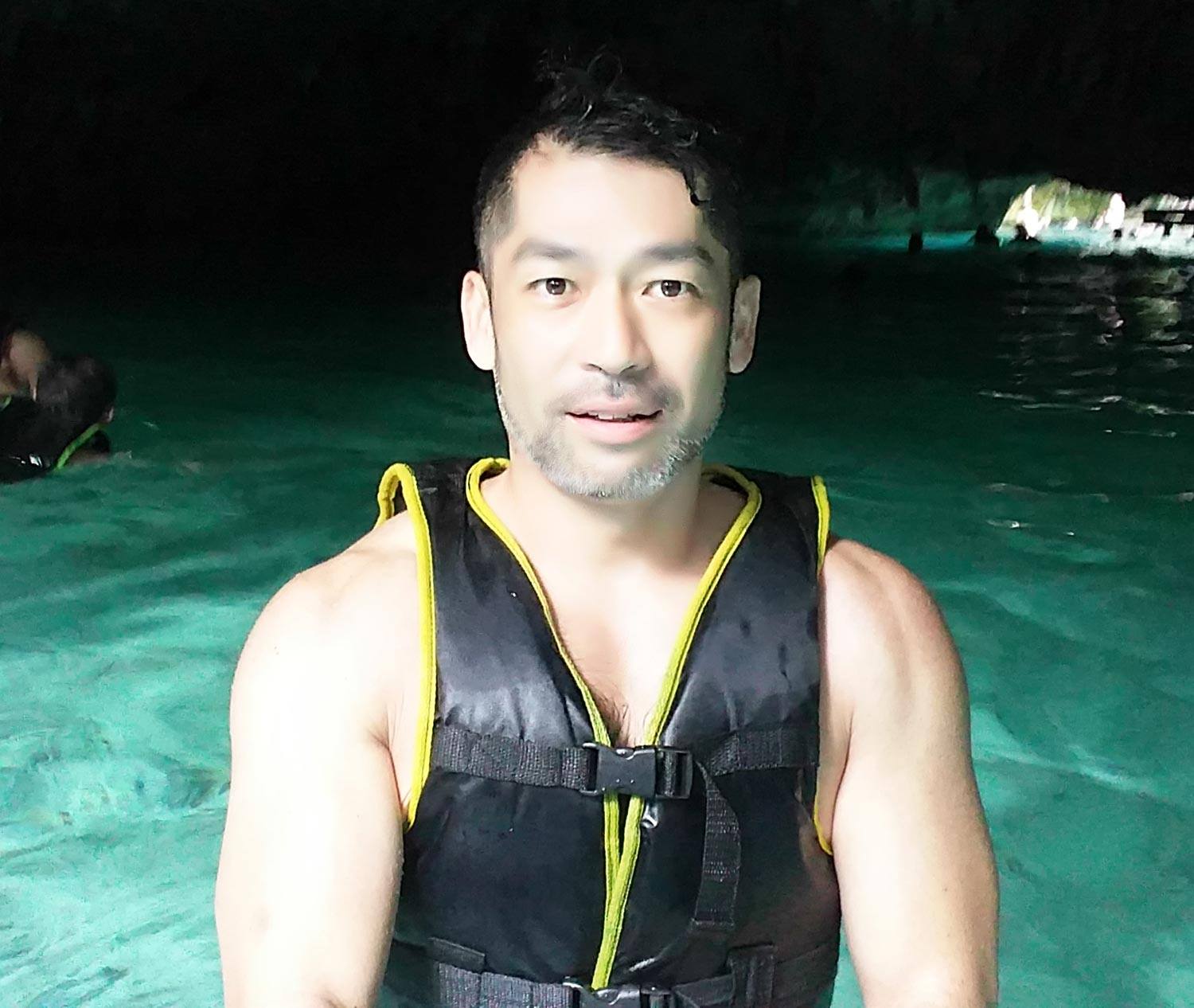
Zuke Oshiro was born in raised in Hokkaido, the north island of Japan, and moved to Los Angeles in 1999. While he had his own educational agency business, Zuke has continuously traveled around world, and writes for numerious publications and journals.
info@socalmag.com

Facebooktwitterlinkedininstagramflickrfoursquaremail