by Randy Dunbar
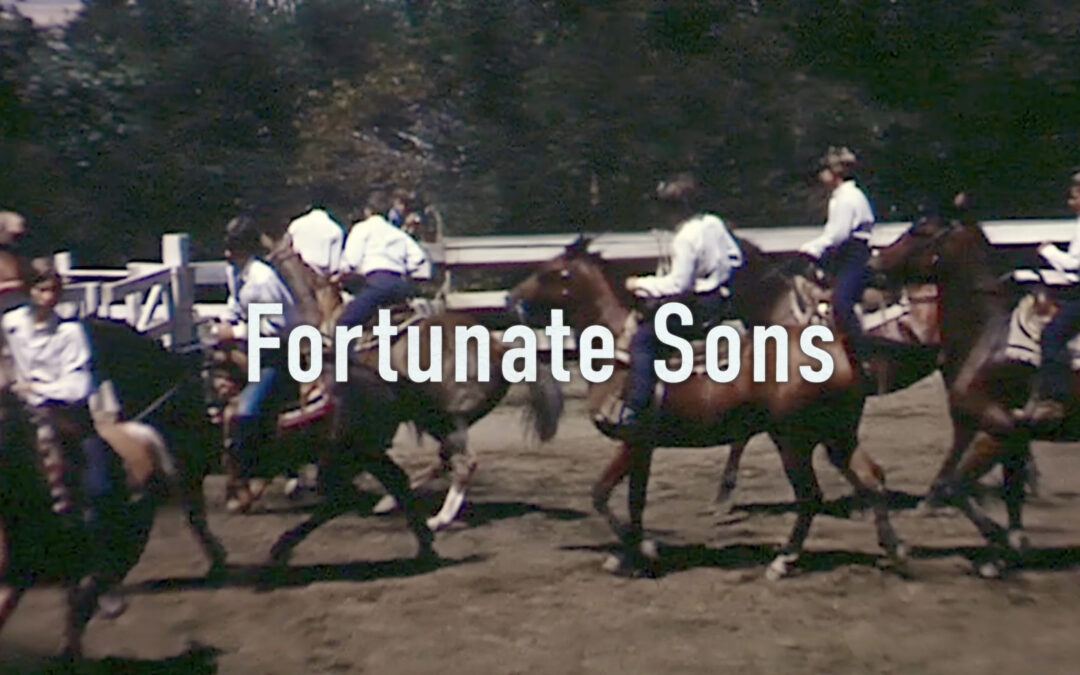
A few years ago, I had the opportunity to meet up with my fellow classmates from High School in a Santa Monica restaurant. It was a reunion of sorts; we hadn’t seen each in decades. We were nine people, with nine stories about life, death, drugs, sex, early crushes, and lost dreams. Watching Fortunate Sons reminded me that the people from those high school years hold a special place in time and memory.
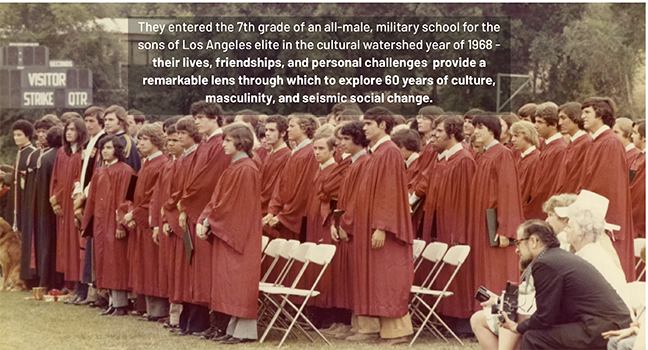
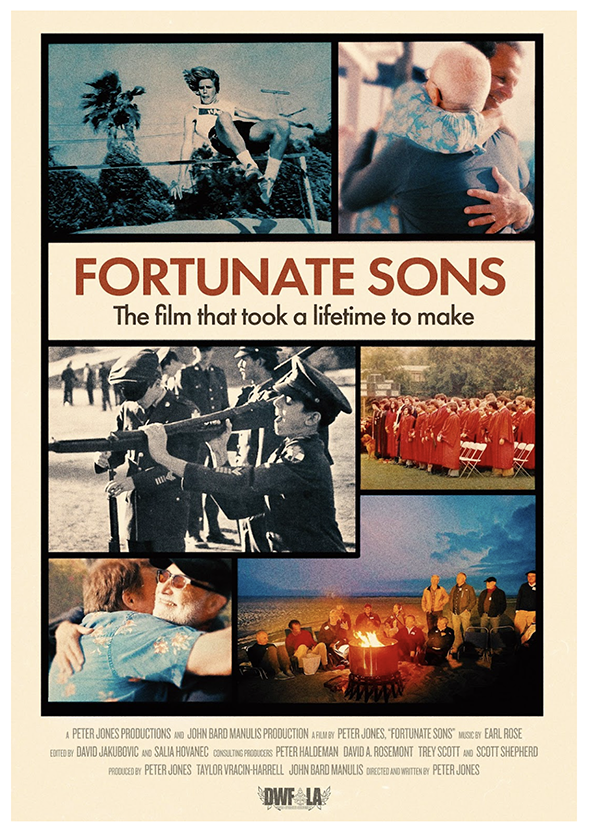
This documentary looks at a group of men—primarily privileged white men who entered high school in 1968. Decades later, during the COVID crisis, they reconnected through Zoom meetings and rediscovered the power of enduring friendship.
As I watched Fortunate Sons, with some hesitation—how could a documentary about a group of rich white kids in a private school be of interest? In a short time, the answer was clear: the stories we each carry are told here—articulate, funny, poignant, and emotional.
The final credits in particular were startling and sad. But this is, after all, a documentary about life.
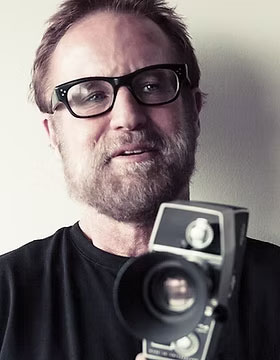
We sat down with director and participant Peter Jones recently to discuss the documentary.
Peter Jones is a documentary filmmaker and producer known for creating socially and culturally impactful films. His work often explores personal and historical narratives, blending intimate storytelling with broader societal themes.
His works has included Inventing LA: The Chandlers and Their Times (2009) – A Peabody Award-winning film that examines the influence of the Chandler family on Los Angeles’s media landscape.
Johnny Carson: King of Late Night (2012) – A documentary about the life and career of the iconic television host, It aired on PBS as part of the American Masters series.
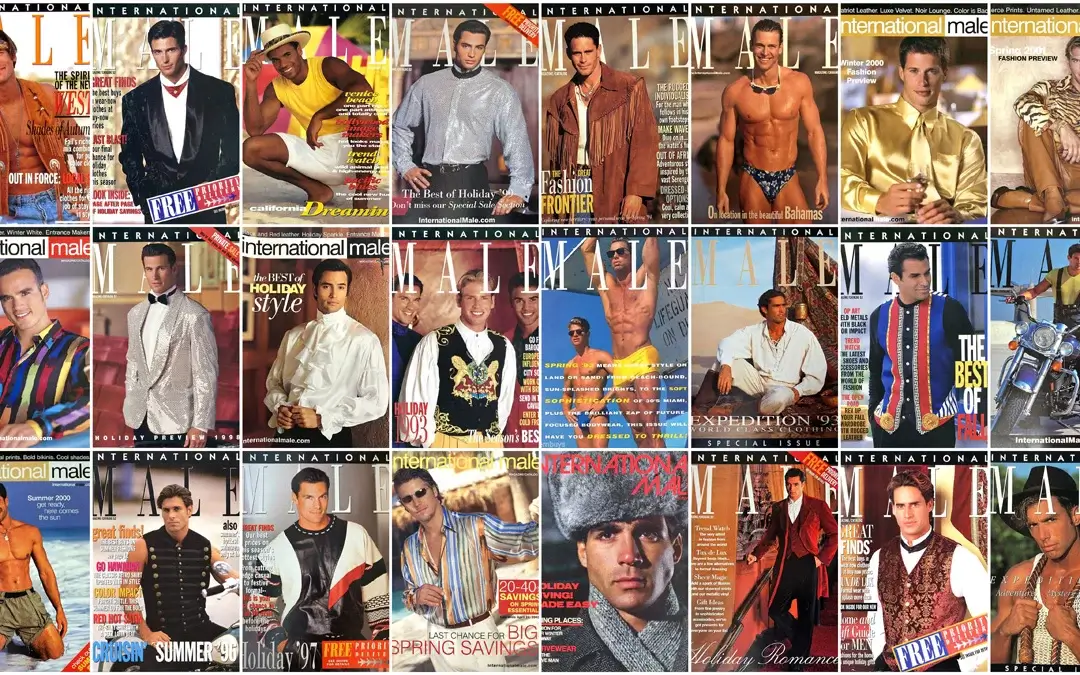
All Man: The International Male Story (2022), a documentary that delves into the history and impact of the International Male catalog (reviewed in SoCalmag.com)
His latest project, Fortunate Sons, reflects his ongoing interest in personal stories within larger social contexts. The documentary will air on PBS SoCal on September 3.
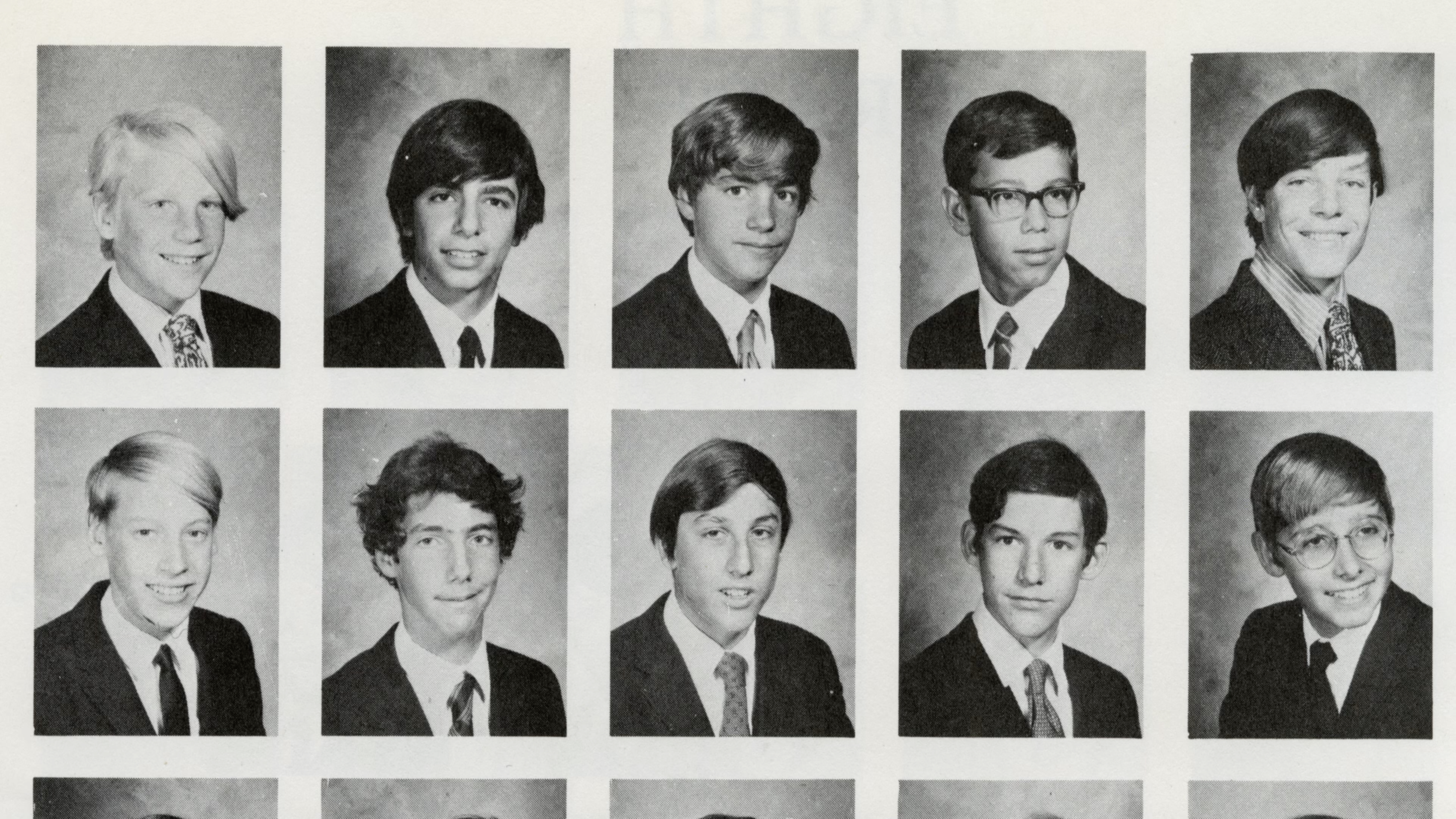
Q: The subject of Fortunate Sons is a look at a group of men from the graduating class of Harvard 1974, and forty years later during COVID, creating the basis for what will be their 50th anniversary. It should be noted that the school in question is the Harvard School for Boys in Los Angeles.
Jones explains that the film traces the lives of classmates over decades, capturing how relationships evolve over time.
Q: How did this documentary come about?
My classmates started holding Zoom meetings, and I attended one. Someone asked, ‘Would you be interested in doing a story about these meetings?’ Our 50th reunion was coming up in four years, so I thought maybe we could build toward that. I joked, ‘Who would give a shit about a bunch of privileged white men? Is there a more hated demographic in America today?’ I apologized on the call because I realized I had to confront my own biases about who would care about growing up rich.”
Once I started the interviews, I was amazed at how candid everyone was. I owe it all to COVID and Zoom—we were stuck at home, but I could connect with classmates anytime.
The Path to Documentary Filmmaking
Q: What pointed you in the direction of making documentaries?
Jones began his career in journalism, reporting news and weather in Roanoke, Virginia, before moving to Austin, Texas, where he covered feature stories and live events.
Moving to LA, I asked myself, ‘What can I do here that nobody else is doing?’ I decided to focus on Hollywood history stories, but tell them truthfully. I started posting short featurettes for the Movie Channel, then worked on AMC in Hollywood, producing longer stories about old Hollywood. That led to my first documentary, Bally: The Art of Cinema Showmanship, hosted by Frankie Avalon. It explored the lengths people would go to attract audiences to movie theaters. I had a blast working on it.
Q: What is the background on this documentary?
Jones emphasizes the bond formed during their shared high school years.
We all went through COVID, were born the same year, and had this six-year period together. Fast forward 45 years, and we naturally fell back into old rhythms—but now with more maturity and better listening skills,” he explains.
The most striking part was how forthcoming everyone was. They trusted me, knowing I wouldn’t betray their confidence. That trust allowed for honest conversations where classmates shared some of the darkest moments of their lives in a way that felt heroic.
Q: One person in your documentary, Martin Montague (his father is Nathaniel “Magnificent” Montague, a famous DJ in Los Angeles in the 60s), was the only Black student at Harvard School for Boys. He did not attend the 50th reunion—did you get a reason?
I have a whole file on Martin. As the only Black classmate, I wanted to tell his story. It took time to earn his trust because his experience at the school was difficult. While he didn’t particularly like the school, he valued the education he received. Over time, we became good friends.
Jones describes Martin as a remarkable person: He survived a challenging childhood, taught himself to fly, and is a skilled electrician. He lives on a farm in Arizona with his partner Olga, raising chickens and even building a plane in their barn. Everything portrayed in the documentary is accurate.
Festival Life and Reception
Q: What happens with documentary films? Do the films go on to festivals?
Festivals talk to each other, and word spread that the film was international, engaging, and unique. While the topic of privileged white men at an all-boys school might seem niche, audiences fell in love with it. PBS SoCal understood its appeal, and I expect word-of-mouth to expand its reach.
It highlights the importance of honest conversation. Young boys today often struggle with depression and anxiety because they don’t talk openly. This film shows men genuinely talking and listening to each other. We’ve been picked up by a distributor for educational screenings in schools, colleges, and nonprofit settings.
Making Documentaries in Today’s Culture
Q: What is it like in the current culture making documentaries?
It’s a different world now,” Jones admits. “There are countless outlets, and it’s harder for anything to stand out. Budgets are smaller than they used to be. I’m taking a break, and I recently found out I was accepted to graduate school at Antioch University to become a licensed psychotherapist. I want to apply the skills I learned as a reporter—and growing up in my family—to help people, especially during these challenging times.
When can we see the documentary?
It airs Wednesday on PBS SoCal at 8 p.m., and again the next day on Thursday at 11 p.m. After that, it will be distributed nationally. I’m grateful to all the PBS affiliates around the country.
To watch the trailer: https://www.fortunate-sons.com/


by Randy Dunbar
On June 17th, the book, “Coastal California” will be published.
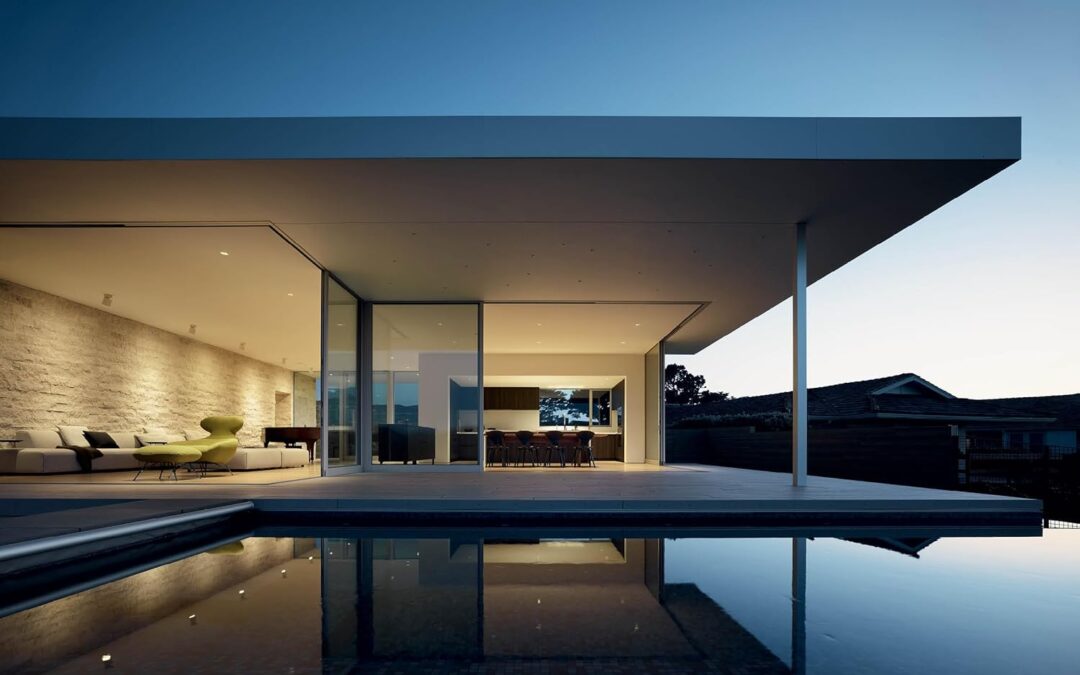
California Coastal is a visual tour of coastal California living, showcasing 18 homes that stretch from the rugged bluffs of Sea Ranch to the sun-drenched beaches of San Diego. The book is divided into three regional sections—Northern, Central, and Southern California—and highlights how architecture can work in harmony with the environment.
The featured homes vary in style, from minimalist modern cabins to weathered, traditional beach houses. But they all share a common thread: a deep respect for the landscape. These aren’t flashy or ostentatious builds. They’re grounded, intentional, and designed to frame the view without competing with it.
What stands out most is the attention to sustainability. Many of the homes are tucked into hillsides, designed to protect from wind and sun while offering expansive views. Materials are chosen for durability and their ability to age naturally in salty air. Landscaping is native, low-maintenance, and often drought-tolerant—reflecting an understanding that living on the coast requires both beauty and restraint.
The book’s photography is immersive and rich in detail, but it also gives space to the architecture to speak for itself. It doesn’t feel overly styled. It feels real. The writing complements the visuals with thoughtful commentary, never overexplaining, but always grounding each home in its place and purpose.
This book is not just for architecture fans—it’s for anyone who’s ever dreamed of coastal living that’s more about connection to nature than coastal clichés. It’s a strong example of how good design can enhance, rather than disrupt, one of the world’s most iconic coastlines.
by Heather Sandy Hebert (Author), Chase Reynolds Ewald
Heather Sandy Hebert is a writer and creative director with a focus on architecture, design, and sustainability. She has collaborated on multiple books that explore the intersection of built environments and natural settings, often highlighting innovative and environmentally conscious design.
Chase Reynolds Ewald is an author and editor who specializes in lifestyle, design, and the American West. With over a dozen books to her name, she brings a deep appreciation for craftsmanship, regional character, and the ways architecture shapes how we live.
Available June 17 at bookstores everywhere.
by Dennis Richardson
HERDEZ® becomes the Official Salsa of the LA Galaxy and an Official Partner of Dignity Health Sports Park
The LA Galaxy, five-time MLS Cup champions, and their home stadium, Dignity Health Sports Park, are proud to announce a new partnership with the maker of the HERDEZ® brand, the top-selling salsa brand in Mexico and a leading authentic Mexican salsa in the United States. This partnership, facilitated by AEG Global Partnerships, will introduce the vibrant flavors of Mexico to soccer fans across Southern California. The maker of the HERDEZ® brand will become the official salsa of the LA Galaxy, and MegaMex Foods will become an official partner of Dignity Health Sports Park (DHSP). This collaboration marks the first partnership between the maker of the HERDEZ® brand and an MLS team.

Courtesy: HERDEZ®, LA Galaxy, AEG
Starting this season, Galaxy fans can expect to enjoy the signature salsa of the HERDEZ® brand alongside the exciting action on the pitch. The partnership will integrate the HERDEZ® brand into DHSP’s culinary offerings, enhancing the overall game-day experience. The premium salsa will be available throughout all DHSP concessions, allowing fans to savor authentic Mexican flavors while enjoying the game.
“We are thrilled to partner with the five-time MLS Cup champions LA Galaxy and Dignity Health Sports Park,” said Ryan Michaelis, President and CEO of MegaMex Foods, home of HERDEZ® Salsa. “We know how passionate LA Galaxy fans are, and we look forward to offering them HERDEZ® authentic Mexican salsa products at every home game. The HERDEZ® brand and the LA Galaxy are simply an unbeatable combination.”
“We are excited for this new partnership between MegaMex Foods and the LA Galaxy,” said LA Galaxy President of Business Operations and Chief Operations Officer, Tom Braun. “We look forward to collaborating with the company, and we’re thrilled that the HERDEZ® brand will be the new official salsa partner of the LA Galaxy. We welcome them to the team.”

Courtesy: HERDEZ®, LA Galaxy, AEG
As part of the collaboration, there will be prominent HERDEZ® branding throughout DHSP on Galaxy game days, including both static and digital field-level signage during designated matches, as well as digital signage on the venue’s Legends Plaza media board. Custom LED ribbon board signage and exposure on the digital scoreboard during all MLS regular-season home games will ensure significant brand visibility during key moments of each match.
“Our partnership with the maker of the HERDEZ® brand is about enhancing the overall fan experience at Dignity Health Sports Park. Beyond the goals and excitement on the field, we wanted to introduce a delicious new culinary option that we know our fans will enjoy,” said Dignity Health Sports Park General Manager Katie Pandolfo. “The HERDEZ® authentic Mexican salsa brings a unique and flavorful new dimension to our concessions and adds to the game-day experience.”
The HERDEZ® brand team will have an opportunity to engage Galaxy fans through a custom activation space during four MLS regular season games at DHSP, a major highlight of the agreement. This space will provide entertainment and a chance for fans to experience the HERDEZ® brand in person. Additionally, the maker of the HERDEZ® brand will support a special LA Galaxy content series distributed across the team’s digital and social platforms during Hispanic Heritage Month, fostering a deeper connection with the Galaxy’s passionate fan base. Over the course of the agreement, the partners will collaborate on various content initiatives across social and digital media to benefit fans and salsa enthusiasts throughout the region.

Courtesy: HERDEZ®, LA Galaxy, AEG
“We are thrilled to welcome the maker of the HERDEZ® brand to our family of LA Galaxy and Dignity Health Sports Park partners,” said Josh Veilleux, Senior Vice President, AEG Global Partnerships. “This partnership not only adds a dynamic new flavor to many of the menu items available at Dignity Health Sports Park’s numerous concession stands but also brings the authentic flavors of Mexico to our fans. It’s a perfect addition that is sure to enhance the overall game-day experience for all.”
About HERDEZ® Brand
The HERDEZ® brand allows consumers to experience the real flavor and culture of Mexico at home with authentic salsas and cooking sauce. The HERDEZ® brand is the No. 1 selling salsa in Mexico and the leading authentic Mexican salsa brand in homes across the US. Best known for products such as HERDEZ® Salsa Verde, Salsa Casera and the original Guacamole Salsa, the HERDEZ® brand is founded on authenticity in flavor and quality you can trust. Innovative authentic flavor experiences is at the forefront of their success. The HERDEZ® brand is part of MegaMex Foods, a joint venture founded by Herdez del Fuerte and Hormel Foods Corporation (NYSE: HRL) and one of the fastest growing Mexican food companies in the U.S. focused on reimagining Mexican flavor. For more information and recipe ideas, visit www.salsas.com/herdez, and follow the Herdez® brand on Facebook, Instagram and Pinterest.
About AEG
Headquartered in Los Angeles, California, AEG is the world’s leading sports and live entertainment company. The company operates in the following business segments: Facilities, which through its affiliation with ASM Global, owns, manages or consults with more than 350 preeminent arenas, stadiums, convention centers and performing arts venues around the world; Music through AEG Presents, which is dedicated to all aspects of live contemporary music performances, including producing and promoting global and regional concert tours, music and special events and world-renowned festivals such as the Coachella Valley Music and Arts Festival; Real Estate, which develops world-class venues, as well as major sports and entertainment districts like Crypto.com Arena and L.A. LIVE, Mercedes Platz in Berlin and The O2 in London; Sports, as the world’s largest operator of high-profile sporting events and sports franchises including the LA Kings, LA Galaxy and Eisbären Berlin; and AEG Global Partnerships, which oversees worldwide sales and servicing of sponsorships including naming rights, premium seating and other strategic partnerships. Through its worldwide network of venues, portfolio of powerful sports and music brands and its integrated entertainment districts, AEG entertains more than 160 million guests annually. More information about AEG can be found at www.aegworldwide.com.
by Randy Dunbar
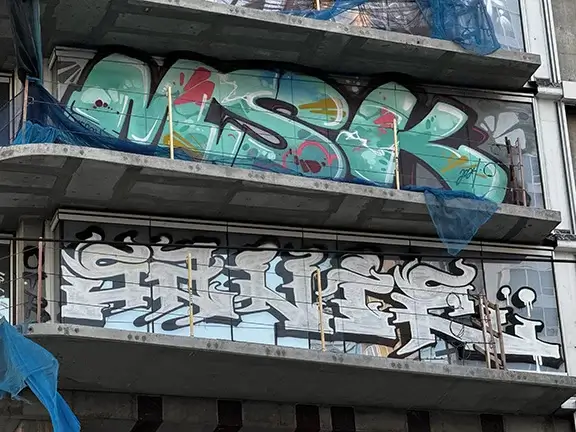
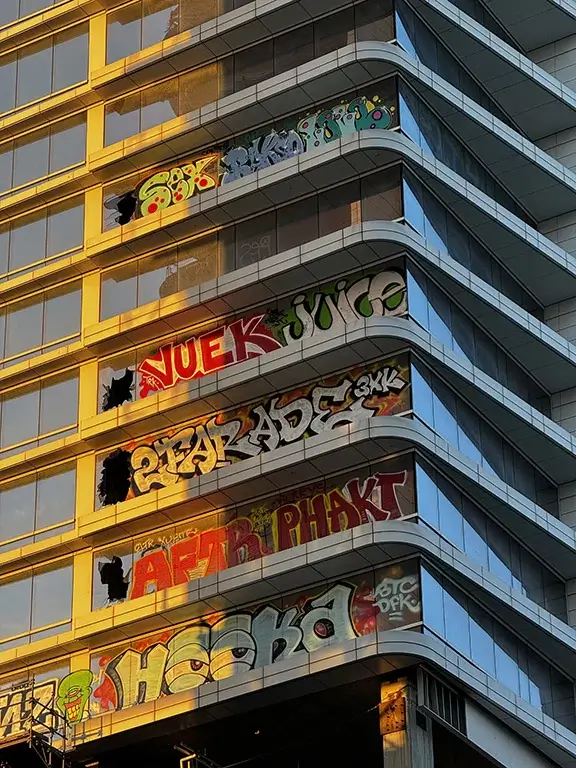
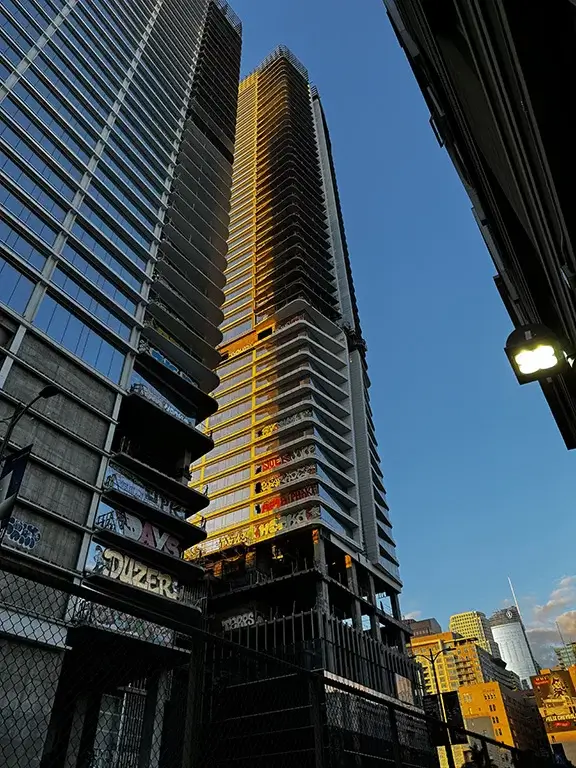
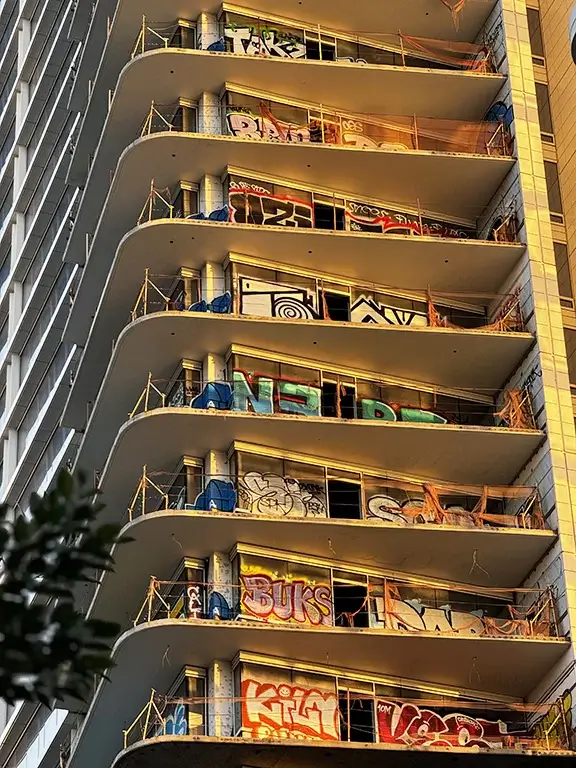
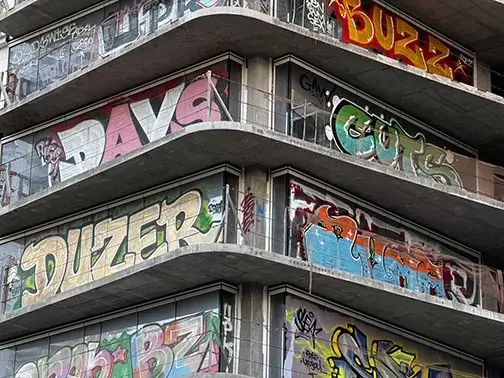
In 2011, MOCA presented a show called “Art in the Streets”, it was the first major U.S. museum survey of graffiti and street art. It was controversial and provoked an academic debate about the nature of graffiti. Today, one need only look up—downtown, South Park, for the moment, home to nearly 27 floors of typographical messages commonly known as graffiti. Derived from the Italian word graffio(“scratch”), graffiti (“incised inscriptions,” plural but often used as singular) has a long history. The graffiti seen here may be short lived as the the Los Angeles City Council.The buildings are part of the Oceanwide Plaza which was meant to be a $1 billion real estate project in downtown L.A., but it’s been empty since 2019. According to the Los Angeles Times’ Summer Lin and Robert Gauthier, the plan was to build three neighboring towers that would serve as luxury condominiums and apartments alongside hotel and retail space. However, construction stopped when the Beijing-based developer backing the project ran out of funds.The abandoned buildings have been an eyesore for locals, and currently the cause of great debate about just what graffiti is. The building looks like an electrical panel with dull cement gray exteriors that have sat for five years, and at some point provided an opportunity for local graffiti artists to decorate the building. Currently, the Los Angeles City Council has voted to invoke the owners to clean up the “mess” of they will and send a bill.
Graffiti can be found throughout the city, from the streets of downtown Los Angeles to the neighborhoods of East LA. Here are some key points about graffiti in Los Angeles:
- Historical Roots: Graffiti has a long history in Los Angeles, dating back to the 1960s and 1970s when it emerged as a form of expression among marginalized communities. The city played a significant role in the development of graffiti as an art form.
- Legal and Illegal Graffiti: While some graffiti is illegal and considered vandalism, there are designated areas and public spaces where street art is legal and even encouraged. The city has a complex relationship with graffiti, acknowledging its artistic value in certain contexts while also enforcing laws against illegal tagging.
- Venice Beach Walls: Venice Beach is known for its legal graffiti walls, where artists can freely express themselves without fear of legal repercussions. These walls attract both local and international graffiti artists, contributing to the vibrant street art culture of the city.
- Murals and Street Art Festivals: Los Angeles hosts various street art festivals and mural projects that bring together artists to create large-scale public artworks. The city has numerous murals that showcase a wide range of styles and themes, often reflecting the cultural diversity of the area.
- Melrose Avenue: Melrose Avenue in West Hollywood is famous for its street art scene. The walls of buildings along this iconic street often feature colorful murals and graffiti pieces, creating an outdoor gallery that reflects the trendy and artistic atmosphere of the neighborhood.
- Downtown Arts District: The Arts District in downtown Los Angeles is another hotspot for street art and graffiti. Former industrial buildings and warehouses in this area have been transformed into galleries and studios, attracting artists who contribute to the urban art landscape.
- Political and Social Commentary: Graffiti in Los Angeles often serves as a platform for political and social commentary. Artists use their work to address issues such as gentrification, inequality, and cultural identity, providing a visual voice for marginalized communities.
It’s important to note that opinions on graffiti vary, and while some view it as a form of artistic expression, others see it as a form of vandalism. The city’s approach to graffiti continues to evolve, with efforts to balance artistic freedom with the need to maintain public spaces.
by Dennis Richardson
We are at a critical point when it seems that everyone is after products that are friendlier to them and their bodies. Many are avoiding vitamins and supplements that are overly processed, questionably sourced, and side effect-inducing, while trading them out for more natural alternatives. With a wave of new cannabis products being introduced that focus on enhancing or treating our various moods and ailments, there’s one company who wants you to know it’s time to upgrade your CBD stash’s status from the kitchen drawer to the medicine cabinet.
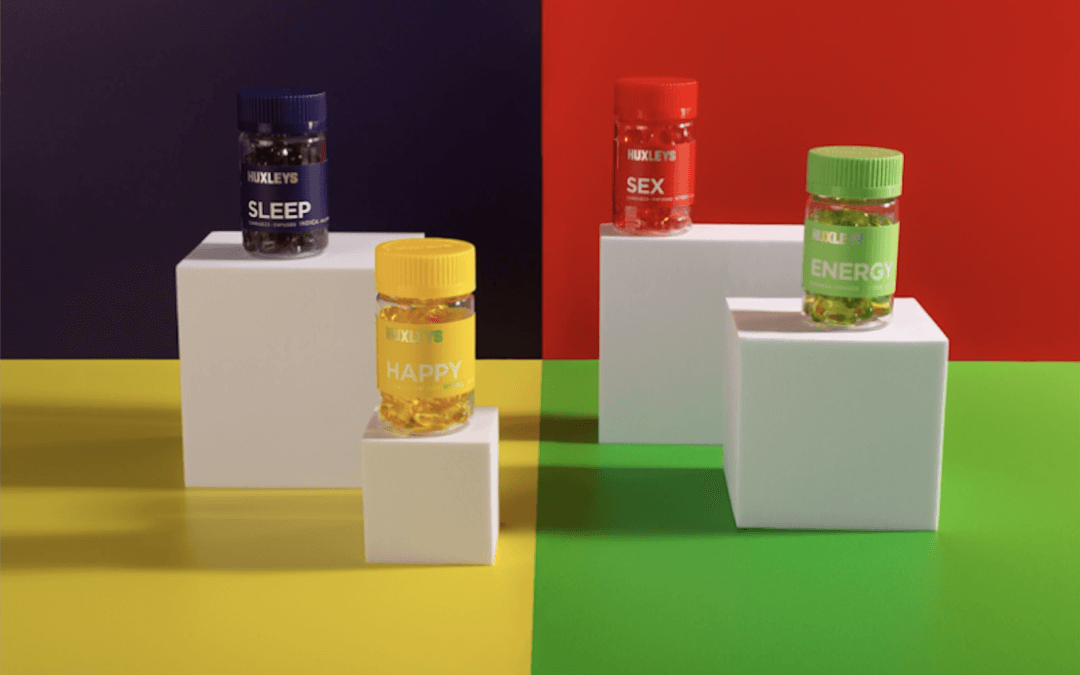
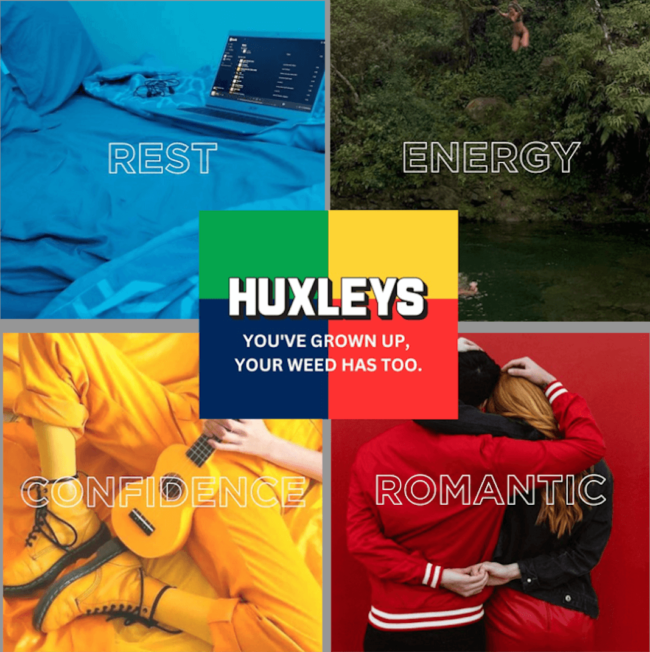
On August 14, Huxleys, a premiere cannabis brand, officially made its debut in the California market. What sets Huxleys apart from others is its unique approach to crafting cannabis products that focus on minor cannabinoids to deliver specific effects – happiness, energy, sex, and sleep. In a groundbreaking move, Huxleys aims to transform your medicine cabinet with meticulously formulated, science-backed products that cater to distinct sensations, providing an unmatched experience.
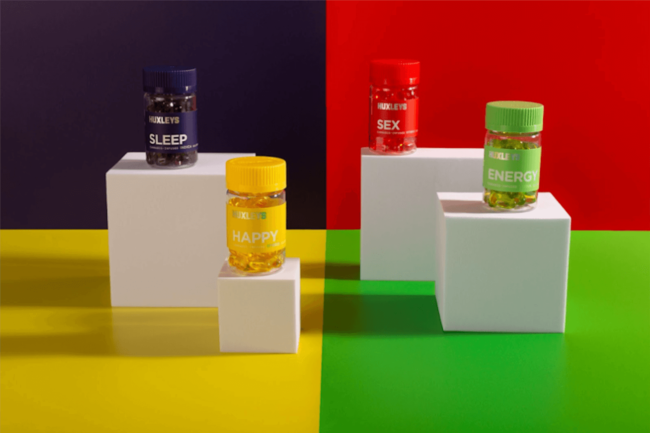
Huxleys firmly believes in the potential of discreet solutions that enhance various aspects of life. To realize this vision, the brand specializes in creating safe, discreet, and effective infused gel-caps and gummies. These products are expertly designed with a combination of THC, CBG, CBN, CBD, and THCV, all complemented by tailored terpenes. The result is a range of effects-based, targeted solutions for everyday life, addressing four areas of our lives that we crave some additional assistance in at some point or another.
At launch, Huxleys introduced four distinct collections of effects-based products, available in both gel-cap and gummy forms. Each product within these collections boasts a unique flavor profile and a range of cannabinoid concentrations, with servings varying from 5mg to 20mg. Notably, all Huxleys products are readily accessible at dispensaries across California, making the pursuit of enhanced well-being accessible with a uniform price of $40. Huxleys is ushering in a new era of cannabis products, where precision and tailored experiences are at the forefront of wellness.
We had the opportunity to try them, and the results were absolutely medicine cabinet-worthy! One point to note for anyone who is a micro-doser, depending on your limitations Huxleys’ current lineup can be outside of your range of comfort, so consider this before buying. As mentioned, the gummies and gel-caps do differ in dosage, so it’s worth checking between the two for what’s right for you. We had the opportunity to try out the gel-cap lineup, and were honestly surprise at how powerful and effective these are.
Energy, Without The Punishment
Who needs coffee when you’ve god THC? That’s basically what it comes down to with Energy, except in this case there’s no crash! Accompanied by an enhanced feeling of focus, Huxleys’ Energy gel-caps give a great mental boost, helping with productivity and even physical activity. The lightest dosage of all four offerings, I was able to test these out and loved how sharp I felt mentally, and without the munchies!
Energy features a blend of cannabinoids and a proprietary terpene mix—but most notably includes THCV, a key component renowned for its capacity to boost motivation, enhance alertness, and suppress appetite. At 5 mg THC and 1 mg THCV, even the lightest of micro-dosers can give this one a shot.
Happiness In A Bottle
I was happy to tap into a friend’s assistance for the remaining three blends, because the last thing you want is for a fun ride to turn into a nightmare. And if there’s one thing marijuana’s going to do, it’s most likely going to make you feel all fluffy inside with the potential to go way south if you overdo it. Happiness in a capsule is exactly what this is, with laughs, smiles, and pure joyousness emanating from within. At 20 mg THC, it’s almost no surprise that the euphoric feelings are to come, but this little yellow bundle of joy even enhanced creativity for story telling, art, and expression. Happy was a mood elevator indeed, and I’d almost argue that I’ve never seen this friend happier.
Sleep Like A Baby
For those restless nights, Sleep was an intense opponent to fight against—but it is possible to prevail in that fight. It’s important to be mindful of when you’re taking this one, due to the fact that if you find yourself too awake and outlasting the sleep-inducing transition, then you’ll just feel yourself sinking into a lazy, bed-ridden hole. On the other hand, if you catch that sleep wave, it has the potential to be some of the best Z’s you’ve experienced. 5 mg CBN, 5 mg CBD, and 5 mg THC make this formula the perfect mix to throw on your ocean sounds, slide on your eye mask, and count the stars.
Sex, Party, Euphoria
You know what it feels like to party? Well, that’s basically what it feels like is going on inside of you here. In fact, besides date nights, parties and music festivals might be a suitable setting to enjoy these as well. This gel-cap had a rhythm to it from beginning to end, and lasted for hours from the initial gentle kick in, all the way through the rush of its peak and recurring waves of the cool down.
Euphoric, tantalizing, and heightened senses are a few of the descriptors I got about the Sex blend, and mention of it feeling like being “in a nightclub.” Sex comes in at 5 mg CBD, 10 mg CBG, and 20 mg THC, which means it’s quite the powerful formula. Experts only!
Just like the pain relief we reach for, Huxleys proved to us that there is indeed a place for them in the medicine cabinet for at least four different potential needs. We’re excited to imagine what will join the lineup next!
by Justin Marlowe
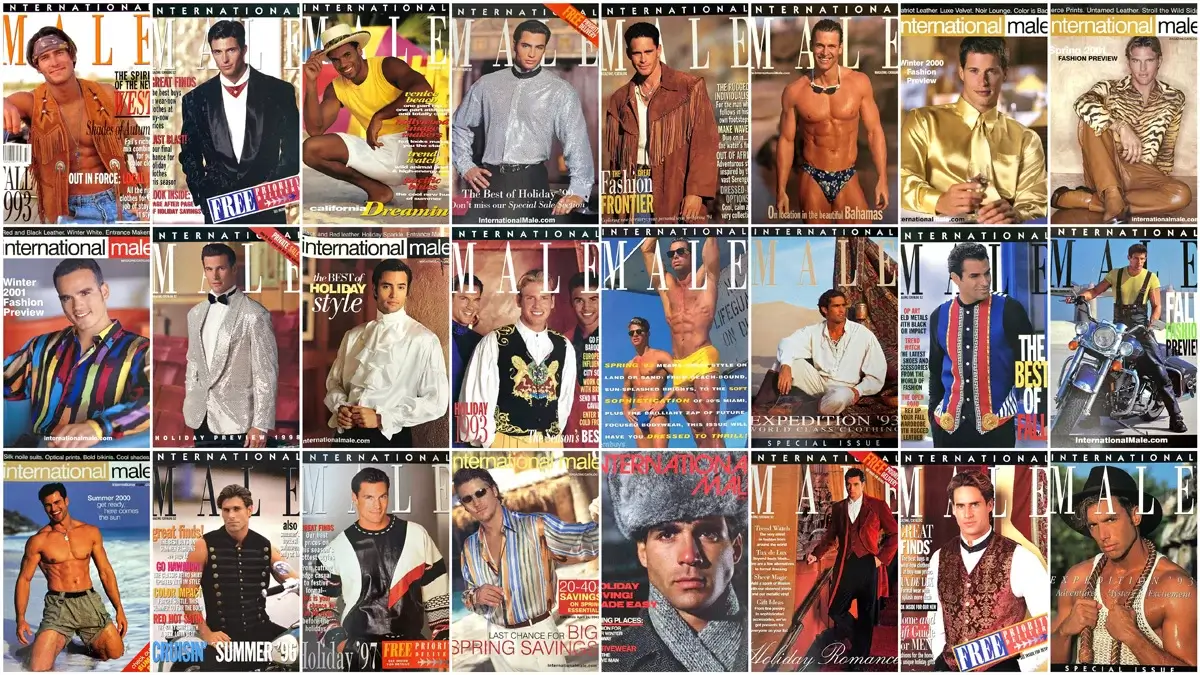
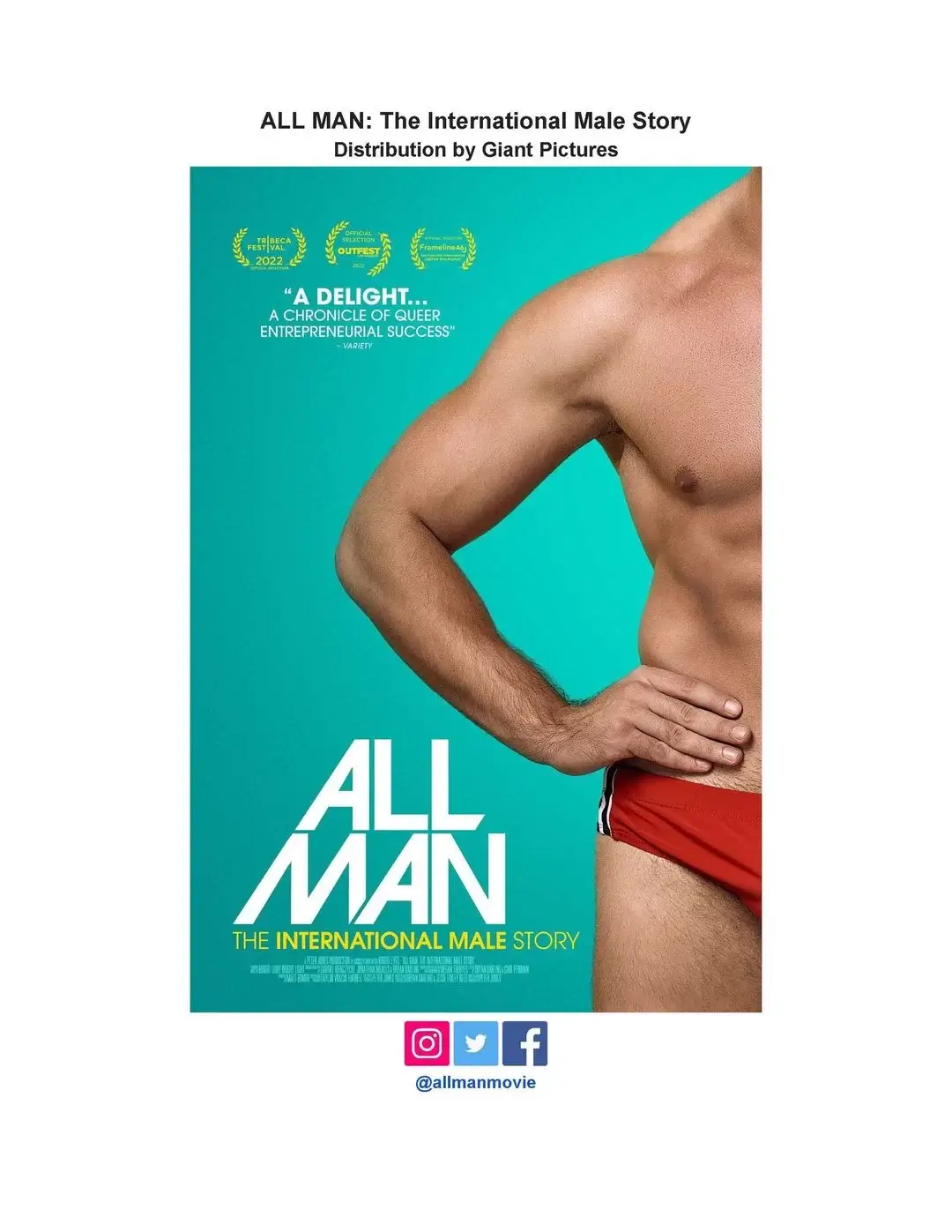
ALL MAN: THE INTERNATIONAL MALE STORY, the Tribeca Festival and Outfest Official Selection arrives on digital platforms June 6. Theatrical screenings will take place in New York (now on June 5!), Los Angeles, San Francisco.
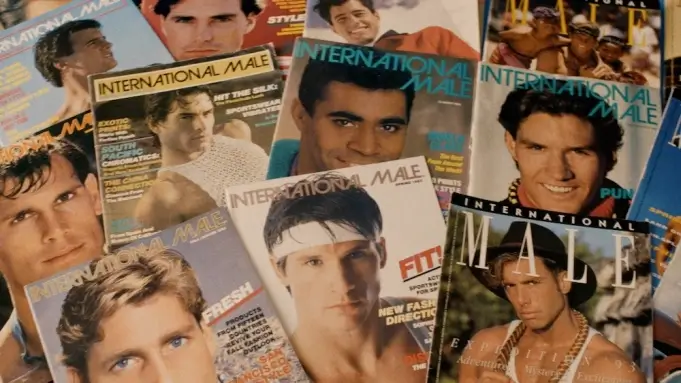
Once upon a time where was a catalog that appeared in public in 1974. The catalog was unlike the Sears catalog or anything else as it had as its focus, men. It is true that 1973 saw the launch of Playgirl magazine, but this was a catalog about fashion, style and sex appeal. And it changed culture. It is likely that the International Male catalog spurred the onslaught of gay men to gyms across American in the late 70s. It helped redefine the notion of masculinity featuring ruggedly handsome models parading on oceanfronts across the world. And it was free.
It was called All Man: The International Story. And now there is a documentary—a very good documentary to tell the story.
The documentary, directed by Bryan Darling and Jesse Finley Reed, is an hour and a half look into a time, a time before AIDS, a time when retail stores could make their mark, and time when the burgeoning gay community was getting a foothold in culture. While New York had its After Dark magazine (mostly dancers and celebrities) this catalog had gay men clamoring for a peek at the tight, skimpy bathing suits. The film features interviews with past models and people employed by the company. And just like the 70s, as we headed into the 80s, AIDS begins to diminish the employees and models. What could have been a light, breezy look at a company that created a sexy catalog, turns into a potent look at life in the early 80s and the increasing horror of an epidemic in the gay community.
The founder of International Male, Gene Burkard, envisioned a platform that would cater specifically to men’s fashion needs, allowing them to explore and embrace their personal style. The catalogs became an essential medium through which the company showcased its unique and avant-garde fashion offerings.
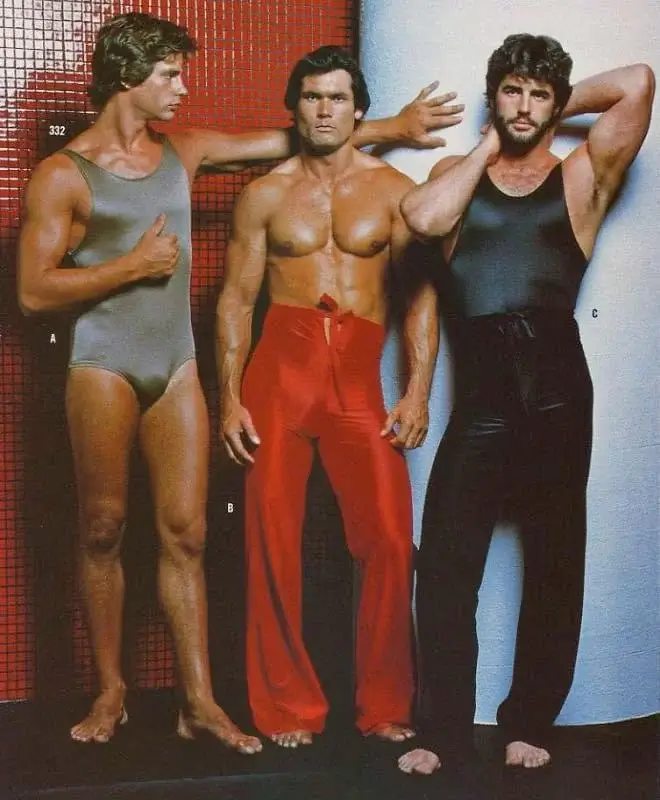
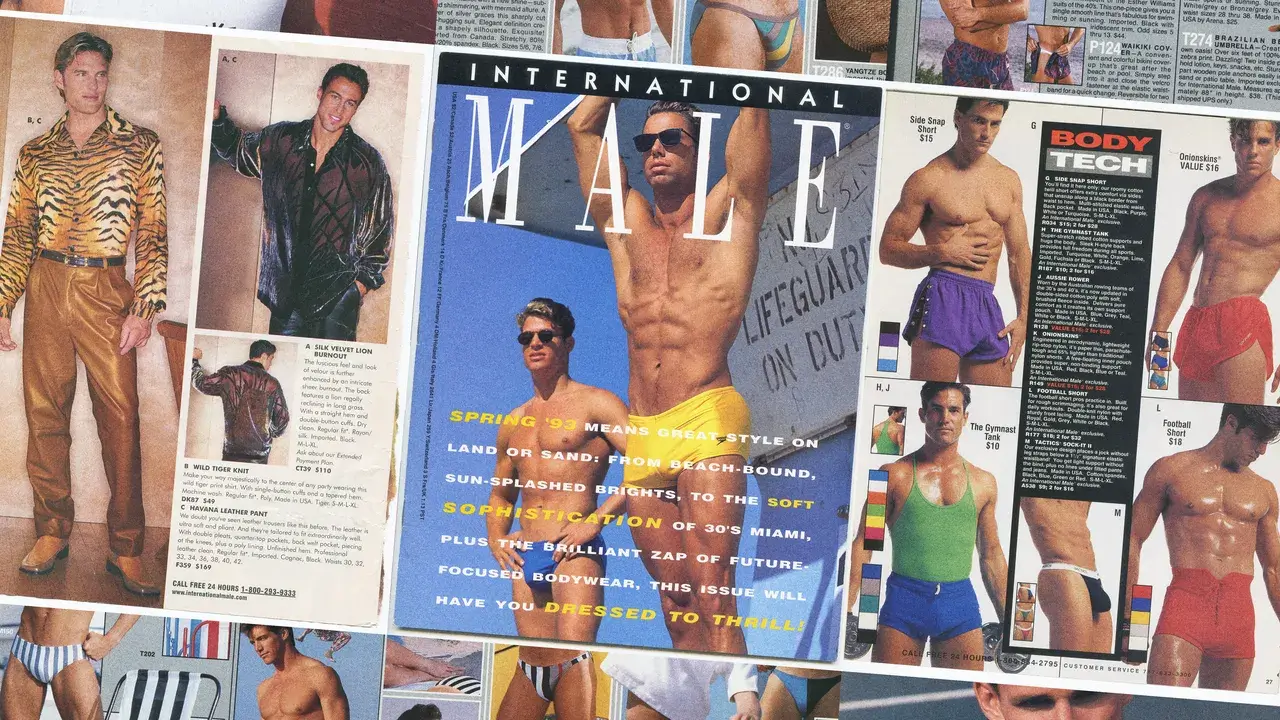
In its early years, International Male catalogs featured clothing that challenged traditional notions of men’s fashion. The catalog presented bold and daring styles, incorporating vibrant colors, unconventional patterns, and experimental designs. It aimed to cater to a diverse customer base by offering clothing suitable for different occasions, including casual wear, formal attire, and even specialized costumes.
The catalogs gained attention for their innovative approach to fashion photography. They featured attractive male models who often posed in seductive and provocative ways, breaking new ground in the realm of men’s fashion advertising. This bold presentation became a defining characteristic of International Male’s aesthetic and contributed to the brand’s allure.
Over the years, International Male catalogs continued to push the boundaries of men’s fashion. They showcased emerging trends, incorporating elements of punk, new wave, and alternative styles. The brand’s commitment to offering unique and cutting-edge fashion choices made it a destination for men seeking distinctive and fashion-forward clothing.
In addition to clothing, International Male catalogs also featured a wide range of accessories, including shoes, jewelry, hats, belts, and grooming products. The brand aimed to provide a comprehensive shopping experience, enabling customers to curate their entire look from a single source.
As the internet gained popularity and e-commerce became more prevalent, International Male adapted to the changing retail landscape. The brand transitioned from traditional print catalogs to online sales, expanding its reach and accessibility to a global audience. This transition allowed International Male to stay relevant in the rapidly evolving fashion industry.
While the brand experienced fluctuations in popularity over the years, International Male catalogs remain a significant part of fashion history. They played a crucial role in challenging traditional gender norms and promoting self-expression through fashion choices for men. The catalogs showcased a wide array of styles and provided men with the confidence to embrace their individuality.
JUNE 5 screening
With special guests, filmmakers Bryan Darling, Jesse Finley Reed, Peter Jones, and Taylor Vracin-Harrell
by Randy Dunbar
The LA Art Show, LA’s largest and longest-running art fair, returns to the Los Angeles Convention Center on February 15–19 to kick off the city’s 2023 art season. Guided by the leadership of LA Art Show producer & director Kassandra Voyagis, the 28th edition promises a larger global presence and more ambitious programming than ever before. LA Art Show will donate 15% of all ticket proceeds to support the life-saving work of St. Jude Children’s Research Hospital®.
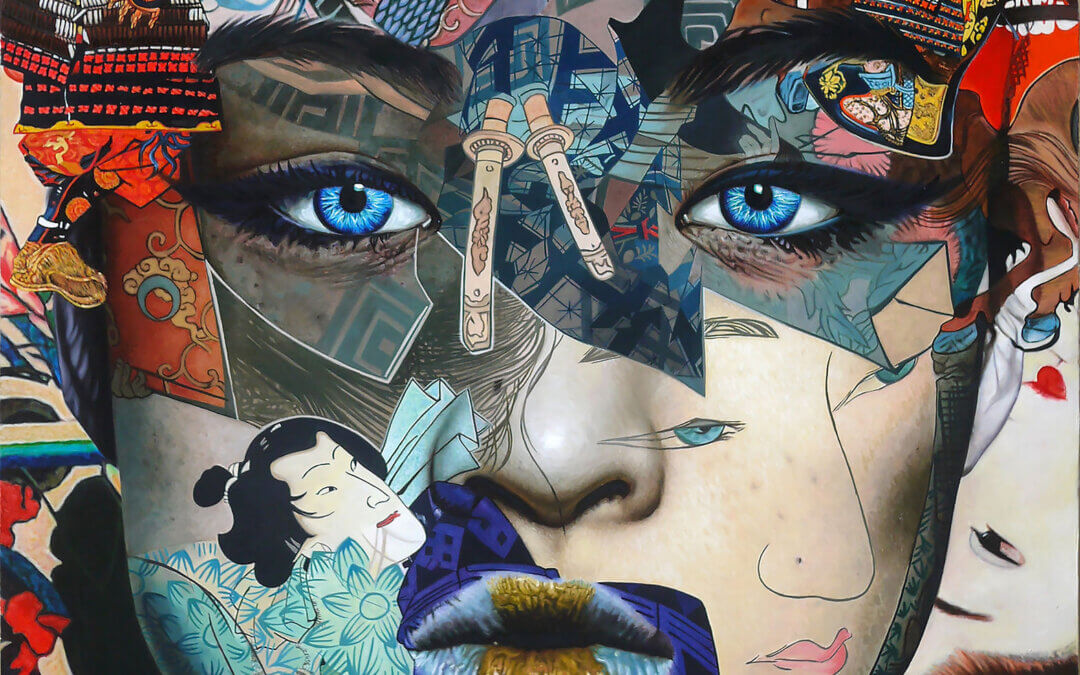
The LA Art Show 2023 includes the exciting return of the European Pavilion; the debut of the Japanese Pavilion featuring 6 galleries from Japan; and more South Korean artists and galleries than ever before in testament to the country’s thriving arts scene.
This year’s fair will inspire important social dialogue with work from Ukrainian artist-turned refugee Denis Sarazhin, stranded due to the war but able to secure accommodations in the U.S. following a generous GoFundMe campaign, and is now transmuting the chaos and uncertainty of his unraveling life into paintings of wild transformation. TRANSformation by MRG Fine Art in partnership with Zero Two 20 promises to be a thought-provoking exhibition, creating an open platform for talent of diverse backgrounds, addressing a foundational transformation inherent in the evolutionary process of both artists and society alike.
Featuring 9 art institutions, the Fair’s non-commercial program and cultural anchor, DIVERSEartLA – curated by Marisa Caichiolo – returns with an ambitious agenda, addressing the global climate crisis. As part of this, MOLAA will present work from iconic Ecofeminist Judy Baca and AMA will present one of Mexico’s most prominent photographers, Alfredo De Stefano. Please visit www.LAArtShow.com to learn more and purchase tickets.

by Mia Barnes
6 Expert Ways to Protect Your Skin From Scarring, Injury and Blemishes
With the warm season here, you bare more skin. However, you want to keep your appearance glowing and blemish-free any time of year.
Your skin is your body’s largest organ, and many things can damage it. Here are six expert ways to protect your skin from scarring, injury and blemishes.
1. Leave New Pimples Alone
While sitting in your 8 a.m. chemistry class, you notice a bump on your chin that feels like a fresh blackhead. Your tendencies might scream, “pick at me!” Please try not to yield to the temptation. Picking at your skin can introduce new dirt and germs into pores, making existing acne worse. Trying to pop a newly erupted pimple can push bacteria and oil deeper into the infected pore, increasing swelling, pressure and redness. Icing such spots can reduce swelling and redness until they reach the point where you can perform an extraction.
2. But Treat Injuries Quickly
The old cliché may advise you to never trust a man who has no scars — but the originator of this saying spoke metaphorically. In reality, you want to practice proper wound care to prevent scarring.
If you get a cut or a burn, your first order of business is to thoroughly clean the wound to remove any debris. You also need to cool burns before applying any ointments that might seal heat inside your skin. Once you’ve cleansed and cooled the area, apply a dab of petroleum jelly to the affected area to keep the wound from drying out and forming a scab. You can also use silicone or hydrogel sheets for larger wounds.
Bruises fade in time, but they can distress you if you end up sporting purple and green blotches that contrast with your sleeveless pink bridesmaid’s gown at a summer wedding. Icing your bruise immediately after the bump occurs can help minimize discoloration. Please ensure that you use a fabric bugger between the ice pack and your skin to avoid making matters worse.
3. Use the Right Tool
Take heart, perfect skin seekers. You can still enjoy the gross-yet-satisfying sensation of popping your pimples if you wait until the right time and use the correct instrument.
It’s best if you use self-care techniques after a seasoned professional shows you the ropes. However, let’s keep it real — not everyone has the money for a dermatologist. You can buy comedone extractors such as those recommended by Dr. Pimple Popper and find instructional videos online if you can’t afford a trip.
4. Or Call a Professional
If you have the means, please see a professional for the best advice on protecting your skin from scarring, injuries and blemishes. Please don’t think this advice implies that you can’t learn how to take care of your skin at home.
However, your dermatologist can help you considerably in this endeavor by identifying your skin type and recommending products ideal for your unique DNA. You could potentially save money by not wasting countless pennies here and there trying various products that may work for others, but not you.
5. Wear Sunscreen
If you haven’t started wearing sunscreen each day yet, please get into the habit. Even if you adopt the mindset of, “early humans didn’t wear protection, and they survived” keep in mind that things have changed. Climate change means humans now experience more ground-level UVA radiation than past generations.
If you eschew commercial sunscreens because of the chemicals some brands contain, you can make DIY protection. All you need is some powdered zinc oxide and a carrier base that works well for your skin type. Coconut oil works wonders for dry skin, while argan oil won’t clog acne-prone pores.
6. Nourish Your Skin
Even if you try to be careful, you will eventually suffer life’s bumps and bruises. When you do, your body will heal itself — and recovery will go more quickly if you provide it with the right building blocks for doing so.
If you don’t follow a vegan diet, try to consume more fatty fish for the omega-3 fatty acids and vitamin E. The omega-3’s reduce redness and inflammation from pimples, while vitamin E protects against damaging free radicals. Plant-based foods such as walnuts, sweet potatoes and red and yellow bell peppers likewise contain various antioxidants that help protect your skin cells from further damage and provide the materials they need to heal.
Protect Your Skin From Scarring, Injuries and Blemishes
Looking your best means taking care of your body’s largest organ. Protect your skin from scarring, injuries and blemishes to give it the best chance at longevity.