by Randy Dunbar
Eli Anizor is an Orange County-based photographer and the founder of Eli Anizor Photography. Starting his journey at a young age, Eli has built a thriving professional practice by leaning into a contemporary perspective that prioritizes raw, honest connection. His work is a living exploration of the Southern California dream—capturing the authentic stories of seniors and couples through a lens that celebrates the region’s vibrant and diverse energy and its endless, sun-drenched possibilities.
Eli is defined by a signature black-and-white style and true-to-life, film-inspired editing. By blending a timeless aesthetic with a sharp, modern eye, he aims to show that a young creator can both experience and define the “SoCal Dream” in real-time. For Eli, photography is about more than just a frame; it’s about the power of visual storytelling and ensuring every shot feels like a narrative worth telling.
Eli explains it:
“Southern California is naturally built into the way I shoot. Growing up here, I’ve gotten used to working with the light, the space, and the overall energy that just feels present every day. The sun hits differently here, evenings stretch out a little longer, and there’s an ease to the environment that makes moments feel strong on their own. Because of that, I don’t feel the need to overcomplicate what’s already there.
When I think about the “Southern California Dream,” I think about possibility. I think about being young in a place that feels expansive — physically and creatively. There’s room to experiment here, to express yourself, to define your own rhythm. That energy finds its way into my images.
My approach is simple: keep it honest. I’m drawn to real expressions, natural movement, and environments that breathe. I don’t over-direct or overproduce. Instead, I create space for moments to unfold and focus on capturing them with intention. Whether in black and white or true-to-life color, my goal is to produce images that feel timeless but still current — polished, yet personal.
As someone who grew up here, I’m not documenting Southern California from the outside. I’m photographing my peers, my generation, and the culture we’re actively shaping. That dynamic allows my work to feel genuine. It’s less about constructing a dream and more about recognizing it in real time and telling the stories of those who share my experiences.
For me, photography is about preserving that feeling — the light, the youth, the in-between moments — in a way that feels effortless but lasting.”


by Randy Dunbar
Clean lines, bold statements, and design that photographs as well as it lives — that’s why Exhibitiv is landing on the radar of Southern California’s interiors crowd. The online gallery specializes in curated, modern wall art, with striking multi-panel works and museum-quality production designed to transform blank walls into instant focal points.
For a region where homes blur indoor and outdoor living and style is part of personal identity, Exhibitiv’s collections offer drama without complication: choose the vibe, pick the scale, and let the art carry the room. It’s contemporary, accessible, and made for the way SoCal lives now. Of course, we were intrigued.
Can we get a brief description of what Exhibitiv is about? Your backgrounds.
Exhibitiv is all about bold three-piece statement art that transforms a space. Marcel and I actually met in high school, long before Exhibitiv existed. We connected over shared taste, curiosity, and a love for noticing the small details that give objects and spaces character.
Marcel comes from digital design and modern commerce. He has spent years shaping brands and visual experiences, guided by a precise eye and a sensitivity to balance and form. His instinct is clarity and he brings structure to abstract ideas, turning them into experiences people can feel. I come from healthcare operations, where empathy, trust, and consistency are essential. I focus on building relationships and making visions real through the right partnerships.
Together, our strengths complement each other. One of us is driven by visual language and creative intention, the other by human insight and opportunity. Exhibitiv is the result of that meeting point, where our paths aligned in a single direction. (I shared the press kit so you can review it and decide what you would like to use).
Are there issues about copyright with the work?
All of our artwork is original, created in-house, or properly licensed. We make sure every piece is fully compliant to protect both the artists and our clients.
How is the art chosen, curated? How much is created or added to a piece?
Curation is very intentional. Each piece is chosen for composition, scale, and emotional impact. Many pieces are refined specifically for the three-panel format with adjustments to flow, contrast, and balance so the triptych feels cohesive. Our goal is not just a pretty image but an art experience that works beautifully on the wall and in the room.
At this time who are your clients? What is currently popular?
Our clients include homeowners, interior designers, hospitality projects, and commercial spaces. Right now, large-scale abstract minimalism, black-and-white compositions, inspired art, and bold architectural or urban themes are especially popular. Statement triptychs are trending over gallery walls.
In an era of AI, where art can be created in seconds, what is your company’s perspective on AI?
AI is a tool, but it cannot replace taste or vision. It can help with creation, but the real value is in curation, scale, and the way a piece interacts with a space. Human judgment, creative intention, and attention to detail are what make our collections stand out.
To take a deeper dive into Exhibitiv visit:


by Randy Dunbar
Asakura, also known as Nihonryori Asakura, is a fine-dining Japanese restaurant in West Los Angeles specializing in kaiseki, the traditional multi-course tasting menu. Affiliated with the Tokyo restaurant La Bombance, Asakura opened in 2025 with the goal of bringing refined, seasonal Japanese dining to Los Angeles. The name “Asakura” comes from the Japanese word for hemp, a symbol of resilience, growth, and protection.
The restaurant is tucked into Vinci Plaza on Santa Monica Boulevard and offers an intimate, minimalist setting with only 12 seats in total—six at the counter and six at tables. Dinner is served at two seatings, typically around 5:00 PM and 7:30 PM, and the restaurant is closed on Sundays and Mondays. The experience is deliberately quiet and focused, with service designed to feel both personal and meticulous. And it is. This is not just a dining experience it is a an epicurean journey in taste, style and flavor. We arrived for the 7:30 seating. It is intimate—you sit closely to your fellow diners as you share the same meal. The essence of kaiseki is seasonality, in this case, locally sourced ingredients, balance as the dishes are intended to balance flavors and textures. The presentation of dishes is paramount: Each course is visually beautiful, often resembling art. Plates, bowls, and garnishes are chosen to complement the food and the season. Harmony and Nature follow as ingredients are intended to evoke a connection to the season and nature. Kaiseki is a multi-course experience where each dish builds on the previous one, from light and subtle flavors to richer, heavier tastes, then ending with a delicate finish. What makes the Asakura experience different is the mindfulness of each dish as it is meant to be slow, contemplative, and immersive.
“This was not merely a dining experience—it was a journey into taste, style, and flavor.”
Asakura is led by Chef Makoto Okamoto, the owner and culinary force behind the esteemed Tokyo-based restaurant La Bombance. With over two decades of experience, Okamoto has cultivated a reputation for delivering intricate, seasonal Japanese tasting menus that have earned Michelin recognition for ten consecutive years. Our head chef on this night is Keigo Yoshida, with manager Ishiba, at the helm.
The Menu for our evening:
・Lotus dumpling , fried yellowtail, sea urchin with seaweed sauce
・Egg plant mousse with smoked abalone with umami dash jelly
・6kinds assorted appetizer
(Tuna sushi ・wagyu beef tartare with brioche ・asparagus ,lettuce with baby sardine ・ankimo cream croquette・scallop,snap pea,leek with miso vinaigrette・salmon belly Escabeche)
・Owan: Sea bream, fried tofu, garnish with grated daikon radish dashi soup
・Steam egg custard with butter seared lobster, summer truffle , crispy puffed rice
・Home made grilled sesame tofu with sesame miso sauce
・Smoke caviar cold noodle
・Japanese A5 wagyu beef wrapped with enoki, onion,leek and chrysanthemum with summer truffle / sukiyaki style
・Seasonal cray pot rice
(Tender octopus ,shrimp ,edamame, ginger )
・White coffee blancmange & Okinawa brown sugar ice cream /hojicha
This was not merely a dining experience—it was a journey into taste, style, and flavor. Each dish was carefully and skillfully hand-delivered, accompanied by thoughtful explanations, making the meal a truly formidable experience. Flavors awakened the palate, some familiar, many entirely new, and all unforgettable. Sitting at the intimate counter allowed us to connect with new friends, sharing our mutual love of food and travel, and creating a sense of camaraderie that extended beyond the meal itself.
Asakura offers two tasting menu options: a six-course meal priced at $200 and an eight-course menu at $300. The dishes change seasonally and feature premium ingredients such as wagyu, uni, caviar, and truffles, alongside locally sourced produce from the Santa Monica Farmers Market. Signature courses have included smoked caviar on cold egg noodles, grilled eggplant with uni and vinegar jelly, lobster chawanmushi with shaved truffle, wagyu tartare on brioche, and a blancmange dessert dubbed “white coffee.” Wine and sake are available, though the corkage policy is strict.
https://asakura.la/
Asakura
Vinci Plaza West LA
11901 Santa Monica Blvd., Suite 111
Los Angeles, CA 90025
Photography by Randy Dunbar & Zuke Oshiro


by Contributor

What is better than art that is free? Plan ahead as SoCal’s most beloved art day is officially back.
On Sunday, February 22, 2026, Museums Free-for-All returns with a region-wide invitation to experience Southern California’s museums with free general admission for one day only. The annual celebration brings together art, design, history, film, science, and cultural institutions across Los Angeles, Orange County, the Inland Empire, and Santa Barbara.
Museums Free-for-All has become a Southern California cultural tradition, offering an open-door moment when longtime locals, first-time visitors, families, and art lovers alike can explore the region’s creative landscape without cost. From contemporary art and classical collections to science centers and cultural museums, the day encourages discovery, curiosity, and access.
Free admission applies to general collections and galleries. Advance reservations or timed tickets may be required by some museums, and parking or special exhibitions may carry separate fees. Visitors are encouraged to check individual museum websites in advance.
Participating Museums (selection)
Academy Museum of Motion Pictures
https://www.academymuseum.org
American Museum of Ceramic Art
https://www.amoca.org
Bakersfield Museum of Art
https://www.bmoa.org
Benton Museum of Art at Pomona College
https://www.pomona.edu/museum
Bowers Museum
https://www.bowers.org
The Broad
https://www.thebroad.org
Craft Contemporary
https://www.craftcontemporary.org
Fowler Museum at UCLA
https://fowler.ucla.edu
Hammer Museum
https://hammer.ucla.edu
Institute of Contemporary Art, Los Angeles
https://www.theicala.org
Long Beach Museum of Art
https://www.lbma.org
Los Angeles County Museum of Art
https://www.lacma.org
MOCA Grand Avenue and The Geffen Contemporary at MOCA
https://www.moca.org
Santa Barbara Museum of Art
https://www.sbma.net
Autry Museum of the American West
https://theautry.org
Skirball Cultural Center
https://www.skirball.org
Columbia Memorial Space Center
https://www.columbiaspacescience.org
Additional participating museums and full event details:
https://socalmuseums.org


by Randy Dunbar
Bob Mackie is an iconic American fashion designer best known for his bold, glamorous, and highly theatrical creations. Often called the “Sultan of Sequins,” Mackie built his reputation designing show-stopping costumes for stage, television, and film, blending Hollywood spectacle with couture-level craftsmanship.
He rose to prominence in the 1960s and became especially famous for his long-running creative partnership with Cher, designing many of her most unforgettable looks. Mackie’s work has also been worn by stars such as Diana Ross, Tina Turner, Elton John, and Carol Burnett. Over his career, he has earned multiple Emmy Awards, a Tony Award, and an Academy Award nomination, cementing his legacy as one of the most influential costume and fashion designers in American pop culture history.
Palm Springs has always understood glamour—not as excess, but as identity. So it feels entirely fitting that the desert city is celebrating one of the most audacious visual storytellers in American fashion: Bob Mackie, whose work now takes center stage at the Palm Springs Art Museum.
For more than six decades, Mackie has dressed the impossible. His costumes didn’t just adorn bodies; they created moments—television moments, red-carpet moments, pop-culture moments that still shimmer in collective memory. Sequins became punctuation. Beading became architecture. And the human form, under Mackie’s hand, became myth.
The Palm Springs exhibition offers more than nostalgia. It traces Mackie’s evolution from a young designer sketching costumes for Hollywood studios to the undisputed master of spectacle whose designs defined stars like Cher, Carol Burnett, Diana Ross, and Elton John. His creations are immediately recognizable: skin-baring silhouettes, impossibly intricate embroidery, and a fearless embrace of camp long before the term entered the cultural mainstream.
What makes this exhibition especially resonant in Palm Springs is the dialogue between place and persona. This is a city shaped by show business escape—by performers who came here to recharge, to reinvent, or simply to exist beyond the spotlight. Mackie’s work reflects that same tension between performance and freedom. His costumes are theatrical, yes, but also deeply personal, often celebrating individuality, queerness, and the power of self-expression in an industry that hasn’t always made space for either.
“His creations are immediately recognizable: skin-baring silhouettes, impossibly intricate embroidery, and a fearless embrace of camp long before the term entered the cultural mainstream.”
The museum presentation highlights Mackie not just as a designer, but as a draftsman and storyteller. Original sketches reveal a disciplined artist beneath the rhinestones—someone who understood proportion, movement, and the psychology of performance. You see how a feather placement could amplify a gesture, how a plunging neckline could signal confidence rather than provocation. Nothing here is accidental.
In a cultural moment increasingly obsessed with minimalism and understatement, Mackie’s work feels radical again. It reminds us that fashion can be joyful, excessive, and unapologetically entertaining—that it can celebrate fantasy without irony. In Palm Springs, a city that has always embraced theatrical living under desert skies, that message lands with particular clarity.
This exhibition isn’t just about what celebrities wore. It’s about how America learned to see glamour through television screens, award shows, and stage lights—and how one designer helped define that vision. Bob Mackie didn’t just dress stars. He made them larger than life.
And in Palm Springs, larger than life feels exactly right.
January 26, 2026 – March 30, 2026
|
Palm Springs
Art Museum
101 Museum DrivePalm Springs, CA 92262
760-322-4800


by Anthony Stafford
Valentine’s Day is near and if you haven’t begun planning for the love in your life yet, you’re a little behind the ball! Luckily, SoCal has plenty of activities, attractions, and destinations, so it isn’t too difficult to dream up the over-the-top evening — or quiet evening where you both lay low.
From Santa Barbara to Carlsbad, there are a few properties looking to woo you and your boo. And this offering is complete with flowers, movies, cooking, dinner, and limited-edition sweet treats you won’t find anywhere else. Check out the roundup below and get to planning on how you’ll celebrate. The clock is ticking!
The Ritz-Carlton Bacara Santa Barbara | Santa Barbara
The Golden Cinema Package
In celebration of its longstanding partnership with the Santa Barbara International Film Festival, The Ritz-Carlton Bacara introduces the Golden Cinema Package, an immersive stay designed for film lovers. Available February 4–14, 2026, the package includes luxury accommodations, a Soak in Cinema in-room bath ritual (one per stay), and priority screening tickets providing access to festival film screenings. The Ritz-Carlton Bacara is a key hospitality partner and venue for the festival and proudly hosts the annual Kirk Douglas Award for Excellence in Film. The Soak in Cinema bath ritual is also available à la carte to all resort guests during the festival dates, offering a cinematic-inspired in-room wellness experience.
Valentine’s Day Dining
-
Marisella: Four-course oceanfront pre-fixe dinner on February 13 & 14, 4–9 p.m.; $150 per person (reservations required).
-
Lulio: “Table for Two” Valentine’s Day pre-fixe dinner on February 13 & 14, 5–9 p.m., with optional wine pairings (reservations required).
-
‘O’ Bar – Lover’s Lounge: Valentine’s-themed specialty cocktails and desserts, including Amour Rouge and L’Assiette de l’Amour, available February 13 & 14.
-
Mission Market: Limited-edition Valentine’s sweets available February 8–14, including a Red Velvet Cake Jar and Raspberry Inspiration Chocolate Bar.
Additional Experiences & Programming
-
Valentine’s Day Card Making: Complimentary card-making on February 13 & 14, 12–2 p.m. on Haskell’s Lawn.
-
Love in Bloom: In-room floral surprises with optional sparkling wine or chocolate-covered strawberries (48-hour advance notice required).
Spa & Wellness
- New In-Room VOYA Bath Rituals: Self-guided bath experiences featuring seaweed, spiced mud, or rice baths, complete with meditation, herbal tea, and post-bath care.
-
Better Together Ritual: An immersive couples spa experience featuring an 80-minute stress-relief massage, KNESKO collagen mask, and guided audio meditation, with full spa access included (booking available through February 28, 2026).
-
Token of Love: Throughout February, spa guests receive a Token of Love at checkout, redeemable for a special surprise at Marisella.
Malibu Beach Inn | Malibu
Romantic Retreats
Where the Pacific Ocean meets a seaside haven, Malibu Beach Inn is an intimate luxury boutique hotel, offering a serene escape for couples seeking quiet beachside lounging and endless sunshine.

Photo Courtesy of Malibu Beach Inn.
Perfect for couples seeking a romantic escape, the Romantic Retreat package features a special welcome pour of Monopole Champagne and chocolate-covered strawberries, as well as a dining credit to the hotel’s award-winning restaurant, Carbon Beach Club. This Valentine’s Day, Carbon Beach Club invites guests to indulge in a three-course prix fixe menu, featuring dishes such as:
-
Burrata al Pepperoncino – di stefano burrata, chili oil, mama lil’s peppers, prosciutto, grilled sourdough
-
Steak Frites – 9 oz creekstone hanger steak, bordelaise, chives, fries
-
Pan Roasted Scallops – braised lentils, saba, aglio rosso, citrus greens
Park Hyatt Aviara | Carlsbad
February 7 at 5:00 pm – Valentine’s Themed Clean Eating Cooking Class | Reservations
Celebrate love with a cozy, feel-good cooking class focused on nourishing, indulgent clean eating comfort food. Whether you’re coming with a partner, friends, or treating yourself, this demo-based class is all about cooking with love—without the junk.
February 12 at 5:00 pm – Early Valentine’s Day Dinner at Ember & Rye | Reservations
Join us at Ember & Rye for a romantic evening featuring an exquisite prix fixe menu and enjoy complimentary babysitting provided by our Munchkin Minders.
February 14 at 5:00 pm – Valentine’s Day Dinner at Ponto Lago | Reservations
Celebrate Valentine’s Day with an intimate dinner experience featuring a thoughtfully curated multi-course menu highlighting seasonal ingredients and shareable plates designed to encourage connection and lingering moments.


by Dennis Richardson
Hyatt Regency Irvine is pulling out all the stops, again!
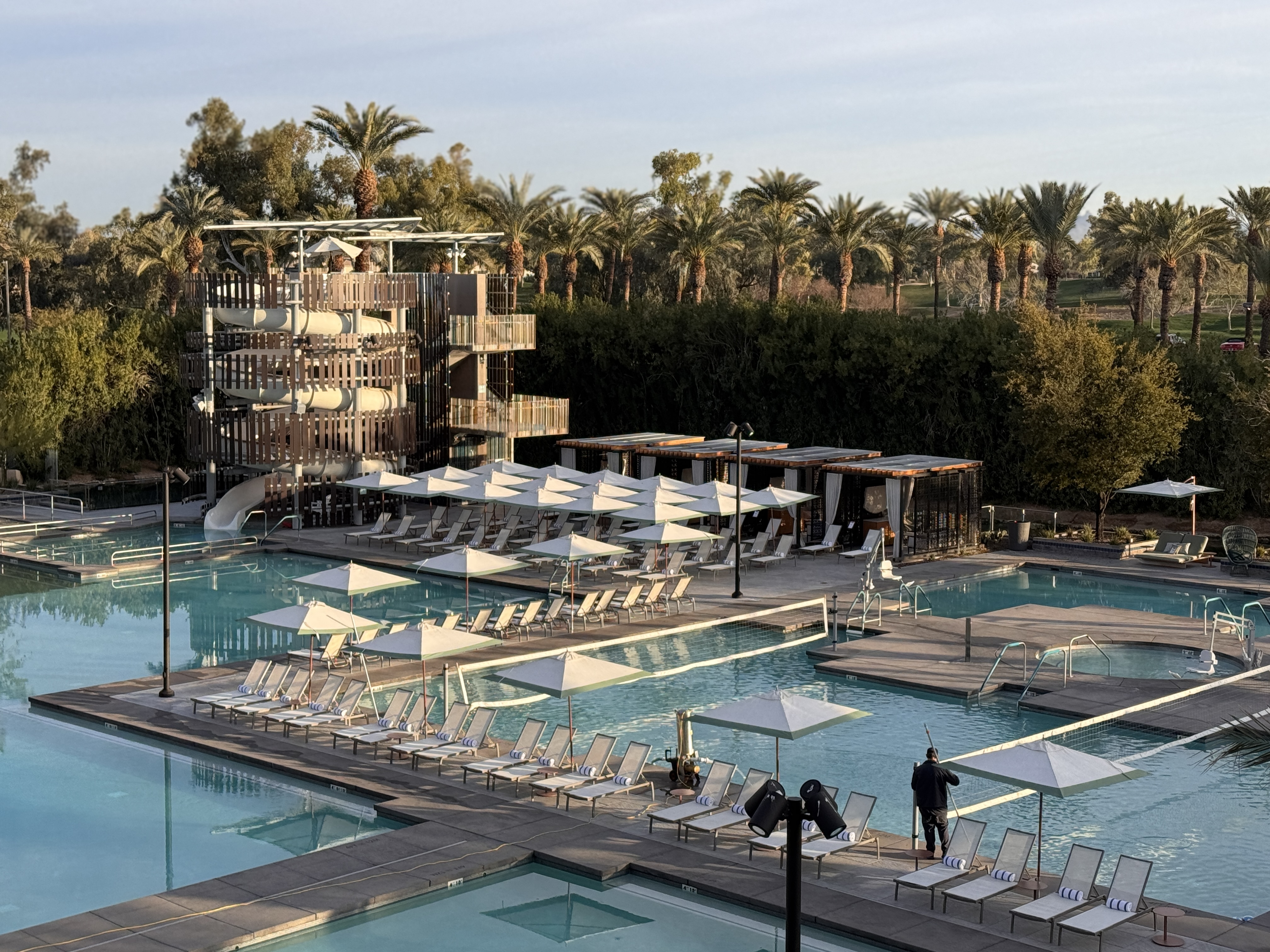
When it comes to the big game, bars, tailgating, and watch parties at your friend’s and family’s homes are officially outdated. What’s taking their place? A private cabana at a heated poolside, with a state-of-the-art 23′ x 16′ LED screen, and more!
Once again, Hyatt Regency Irvine is kicking off Super Bowl Sunday with the hotel’s second annual Poolside Touchdown Finale, a family-friendly, high-energy celebration that takes game day beyond the living room.
From kickoff through sunset, guests can catch every play live on a massive 23’ x 16’ LED screen while soaking up the fun with heated pool access, kid-friendly water slides, festive football-themed décor and a game-day–inspired menu. Expect poolside classics, BBQ favorites, playful desserts and specialty beverages designed for all ages.
Open to both hotel guests and locals alike, the Poolside Touchdown Finale highlights include:
- Big Game Viewing: Every play, every replay—watch the Big Game poolside on a 23’ x 16’ LED screen that brings you front-row energy without the stadium crowds.
- Heated Pool Fun: Make a splash between drives with a heated pool, kid-friendly water slides, and football-themed décor—because game day should include cannonballs.
- Game-Day Menu: Classic football eats, BBQ favorites, and specialty beverages designed to keep your playbook (and your plate) full all afternoon.
- Lawn Games & Entertainment: Toss, play, and cheer it out with football-inspired lawn games keeping the sidelines lively.

Photo Credit: Logan Pratt / Hyatt Regency Irvine
To enhance your Super Bowl experience, Hyatt Regency Irvine is offering exclusive VIP and cabana packages—perfect for the ultimate game-day celebration. And for those who need a little time to celebrate their team wins (or losses), Hyatt Regency Irvine makes for one of the finest hospitality experiences available. Hotel guests enjoy complimentary access, with food and beverages available for purchase; while non-hotel guests can join the action by booking a DayPass or private cabana. More information is available below and detailed package inclusions are available here.
- Private Cabana Packages: Starting at $190, enjoy premium private seating, a dedicated TV screen, a mini-fridge stocked with bottled water, and access to an exclusive food menu for purchase. Packages accommodate 2–10 guests, depending on cabana size.


by zuke oshiro
Today, nearly 50 million annual trips occur between Los Angeles and Las Vegas – over 85% of them by automobile – a trip which is unpredictable, unreliable and challenged by congestion. Brightline West expects to serve 9 million one-way passengers annually.
The idea of a fast, reliable rail link between Southern California and Las Vegas has been kicking around for decades, resurfacing every time I-15 turns into a weekend parking lot. What’s different now is that the project is no longer a speculative concept or a string of glossy renderings. The line now has a defined route, named stations, major funding commitments in place, and years of field work already underway along the corridor.
The project most people mean when they say “the train to Vegas” is Brightline West, a privately led high-speed rail line planned to connect Las Vegas with the Los Angeles region by running largely in the median of Interstate 15. The route is designed to be about 218 miles long, built for all-electric trains capable of speeds above 200 miles per hour. The headline promise has always been simple: turn a drive that can swing from four hours to “who knows” into a trip measured in roughly two hours, with a schedule that doesn’t depend on traffic, holiday gridlock, or the weather.
One of the biggest points of confusion is the “Los Angeles” part of the route. The southern terminus is planned for Rancho Cucamonga, not downtown Los Angeles. That choice is strategic: building straight into the most complex parts of the LA Basin would add time, cost, land constraints, and political headaches. Instead, the plan is to plug into an existing regional rail hub so travelers can reach the station via Metrolink and other local connections, then board the high-speed service for the desert run. For Angelenos, that means the trip becomes two steps: getting to Rancho Cucamonga, then taking the high-speed train to Las Vegas. The total door-to-door time will depend heavily on how seamless the local connection is and how frequently trains run.
Las Vegas, meanwhile, is positioned to be a more straightforward arrival experience. The planned station site is south of the Strip on Las Vegas Boulevard, intended to function as a purpose-built gateway for visitors, with space designed for the kind of passenger flow Vegas is used to handling. In between, the line is expected to include stations in the High Desert, with Apple Valley and Hesperia commonly cited as key stops. The point isn’t just to serve Vegas tourists; it’s also to build a spine of mobility through a corridor where growth has been strong and where I-15 is often the only practical option.
A major milestone arrived when the project secured a multibillion-dollar federal grant agreement through a partnership with the Nevada Department of Transportation. That grant is aimed at final design and construction and has helped shift the project from aspiration to execution. The financing plan also leans on private capital, including federal private-activity bond capacity, a structure often used to fund large infrastructure that has a defined revenue model. The mix matters because it affects how quickly the project can move and how insulated it is from the start-stop cycles that have defined many American megaprojects.
Groundbreaking ceremonies in 2024 marked the public start of construction, but the more telling signs of progress have been the less glamorous ones: surveys, geotechnical work, utility investigations, and on-the-ground field activity in both Nevada and California. This kind of work is where a project either proves it can navigate reality or gets swallowed by it. The corridor may look simple on a map—follow I-15, keep it straight—but the details are complicated: bridges, interchanges, drainage, utilities, soil conditions, maintenance facility needs, construction staging, safety requirements, and the constant challenge of doing heavy work adjacent to one of the busiest travel highways in the West.
“The schedule has also become clearer—and less dreamy. For years, the unofficial hype line was “in time for the Olympics,” with the 2028 Summer Games in Los Angeles serving as a symbolic deadline. The more recent planning has shifted expectations toward the end of the decade, with late 2029 now widely associated with the projected start of service.”
The schedule has also become clearer—and less dreamy. For years, the unofficial hype line was “in time for the Olympics,” with the 2028 Summer Games in Los Angeles serving as a symbolic deadline. The more recent planning has shifted expectations toward the end of the decade, with late 2029 now widely associated with the projected start of service. That change doesn’t necessarily signal trouble; it reflects the reality of building a high-speed rail system from scratch in the U.S., with new stations, new track, new signaling, new power systems, extensive testing, and the necessary approvals layered on top. The closer a project gets to real construction, the more honest the timeline tends to become.
There’s also an environmental story running underneath the transportation story. A line cutting across the Mojave Desert raises unavoidable questions about habitat, wildlife movement, and long-term impacts. Plans for wildlife overcrossings and other mitigation measures have been part of the project’s development, aimed at reducing the barrier effect that rail infrastructure can create for species that already navigate a fragmented landscape. This is not just an add-on; it’s the kind of requirement that can shape design, budget, and construction sequencing.
So what is the “update” right now? The most meaningful update is that the project appears to be in the grinding middle stage between announcement and arrival—the stage where timelines get revised, financing gets finalized, construction plans get tested in the field, and the public begins to see more than press conferences. The late-2029 target is a practical marker to watch, but the more immediate tells will be visible construction milestones in 2026 and 2027: sustained heavy work along the corridor, station progress that’s impossible to miss, and major procurement and testing steps for the trains themselves.
For Southern California travelers, the eventual success of the service will be judged on a few simple questions. How easy is it to get to Rancho Cucamonga without a car? How frequent are departures on peak weekends? What does the pricing look like compared to driving, flying, or taking a bus? How smooth is the last mile in Las Vegas? If those pieces land, the train becomes more than a novelty—it becomes a new default for one of the most traveled leisure corridors in the region.
For now, the clearest takeaway is that the Vegas train is no longer a “maybe someday” concept. It’s a real infrastructure project with real constraints, real funding, and a real timeline that has settled into the end-of-decade range. The next year or two will determine whether it keeps momentum through the hardest part: turning plans into track, stations, systems, and a service that can run safely at true high-speed—day after day, weekend after weekend—on the one route where demand has never been the problem.


by June Miller Richards
There’s no better way to experience Los Angeles than on foot, and few places capture the city’s spirit like Griffith Park. On Sunday, February 1, 2026, runners and walkers of all levels are invited to do just that when the annual Griffith Park Run Half Marathon and 5K returns. Registration is now open.
A favorite on Southern California’s winter race calendar, the event offers two distinct ways to take in the park’s rugged beauty. The Half Marathon winds through all of Griffith Park’s main trails, giving participants a rare, uninterrupted tour past familiar landmarks — from the historic Merry-Go-Round to the Autry Museum — all while soaking in sweeping views and crisp morning air. The 5K, by contrast, keeps things relaxed with a flatter, mostly shaded route that’s ideal for beginners, casual runners, and walkers.
New this year, the Griffith Park Run is officially going to the dogs. For the first time ever, dogs are welcome to register and participate in the 5K, making it a truly inclusive, tail-wagging event for the whole family.
The run also supports a meaningful cause. A portion of proceeds benefits the Los Angeles Parks Foundation, which works year-round to preserve and enhance public parks, recreational areas, and open spaces across the city, helping ensure these shared spaces remain accessible and welcoming for Angelenos of all backgrounds.
Race-day perks extend beyond the finish line. Participants receive a commemorative medal and premium event T-shirt, along with access to food trucks, sampling booths, raffle prizes and a post-race expo at the start/finish area near the Autry. The Half Marathon begins at 7:30 a.m., followed by the 5K at 10:00 a.m. Free public parking is available throughout Griffith Park (participants are encouraged to follow posted RunGPR parking signage).
Whether you’re chasing a personal best, walking with friends or jogging alongside your four-legged training partner, the Griffith Park Run offers a uniquely Los Angeles way to kick off the year with equal parts fitness, fresh air and community.
Registration is now open at www.rungpr.com.
Know Before You Go: Griffith Park Run 2026
Location: Griffith Park (Start/Finish near the Autry Museum)
Date: Sunday, February 1, 2026
Distances & Start Times
- Half Marathon: 7:30 a.m.
- 5K: 10:00 a.m.
Dogs:
- Dogs are officially welcome in the 5K for the first time this year
- Must be registered and run with their owner
What’s Included:
- Commemorative finisher medal
- Premium event T-shirt
- Food trucks, sampling booths & raffle prizes
- Post-race expo at the start/finish area
Giving Back:
- A portion of proceeds benefits the Los Angeles Parks Foundation, supporting public parks across L.A.
Parking:
- Free public parking available throughout Griffith Park
- Follow posted RunGPR parking signage at Crystal Springs Road entrances
Registration:
m


by Randy Dunbar
With the release of the latest Oscar nominations, the state of motion pictures in Hollywood appears paradoxical: creatively confident, culturally relevant, yet economically unsettled.
On the artistic front, the industry is showing real vitality. The nominated films span prestige studio productions, independent cinema, international storytelling, and genre-blending work that would have struggled for awards recognition a decade ago. The range suggests that filmmakers are taking risks again—experimenting with form, tone, and subject matter—and that the awards ecosystem is more open to unconventional narratives. From a purely creative standpoint, cinema looks alive, ambitious, and self-aware.
Culturally, movies still matter. The Oscar nominations continue to shape conversation, revive interest in films that may have had modest theatrical runs, and reinforce cinema’s role as a shared cultural reference point. Even as audience habits fragment across platforms, the awards season remains one of the few moments when film commands broad attention beyond fandom niches.
The economic picture, however, is more complicated. Many of the most critically celebrated films are not box-office juggernauts. The traditional relationship between prestige, profitability, and theatrical longevity has weakened. While a handful of large-scale releases still perform well, much of the Oscar-recognized work now relies on streaming platforms, limited releases, or hybrid distribution models. Theatrical exhibition is no longer the primary engine for many serious films, even when they achieve awards success.
At the industry level, Hollywood is also less geographically centered than before. Production continues to disperse to incentive-friendly states and countries, reducing Los Angeles’ dominance as the physical home of filmmaking even as it remains the symbolic and creative hub. This shift affects employment patterns, studio infrastructure, and the long-term identity of Hollywood as a place versus an idea.
Taken together, the Oscar nominations suggest an industry in transition rather than decline. Motion pictures are not creatively exhausted; if anything, they are artistically reinvigorated. What is unsettled is the business model—how films are financed, released, monetized, and sustained in a landscape where streaming convenience often outweighs theatrical tradition.
In short, Hollywood cinema today is artistically healthy, culturally resilient, and economically re-negotiating its future. The Oscars no longer reflect the peak of commercial success, but they still serve as a reliable barometer of where serious filmmaking is heading—and that direction remains bold, diverse, and very much alive.
BEST PICTURE
Bugonia
F1
Frankenstein
Hamnet
Marty Supreme
One Battle After Another
The Secret Agent
Sentimental Value
Sinners
Train Dreams
BEST DIRECTOR
Chloé Zhao
Josh Safdie
Paul Thomas Anderson
Joachim Trier
Ryan Coogler
BEST ACTOR
Timothée Chalamet
Leonardo DiCaprio
Ethan Hawke
Michael B. Jordan
Wagner Moura
BEST ACTRESS
Jessie Buckley
Rose Byrne
Kate Hudson
Renate Reinsve
Emma Stone
BEST SUPPORTING ACTOR
Benicio Del Toro
Jacob Elordi
Delroy Lindo
Sean Penn
Stellan Skarsgård
BEST SUPPORTING ACTRESS
Elle Fanning
Inga Ibsdotter Lilleaas
Amy Madigan
Wunmi Mosaku
Teyana Taylor
BEST ORIGINAL SCREENPLAY
Blue Moon
It Was Just an Accident
Marty Supreme
Sentimental Value
Sinners
BEST ADAPTED SCREENPLAY
Bugonia
Frankenstein
BEST ANIMATED FEATURE
Arco
Elio
KPop Demon Hunters
Little Amélie or the Character of Rain
Zootopia 2
BEST CASTING
Hamnet
Marty Supreme
One Battle After Another
The Secret Agent
Sinners
BEST CINEMATOGRAPHY
Frankenstein
Marty Supreme
One Battle After Another
Sinners
Train Dreams
BEST COSTUME DESIGN
Avatar: Fire and Ash
Frankenstein
Hamnet
Marty Supreme
Sinners
BEST FILM EDITING
F1
Marty Supreme
One Battle After Another
Sentimental Value
Sinners
BEST PRODUCTION DESIGN
Frankenstein
Hamnet
Marty Supreme
One Battle After Another
Sinners
The Academy Awards (Oscars) take place on Sunday, March 15, 2026.
They are held at the Dolby Theatre in Hollywood.
The public can watch them live on ABC in the United States and stream them live on Hulu.
Official Academy of Motion Picture Arts and Sciences (Oscars)
• Oscars official site (general info, history, press, events):
https://www.oscars.org/
Official Ceremony Info
• 98th Academy Awards ceremony details (date, nominees list page):
https://www.oscars.org/oscars/ceremonies/2026
Official “How to Watch” Info
• Where to watch the Oscars (includes broadcast & streaming options):
https://www.oscars.org/how-to-watch/
Broadcast Network
• ABC Oscars page (broadcast info and related content):
https://abc.com/shows/oscars
Official Social Media & Video
• Official Oscars YouTube channel (clips, highlights, announcements):
https://www.youtube.com/@Oscars
These sources give you accurate dates, broadcast info, streaming details, and live coverage options for the 98th Academy Awards on March 15, 2026.


by Contributor
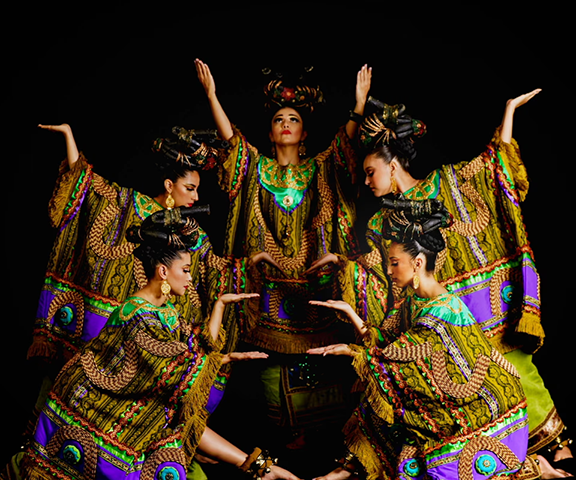
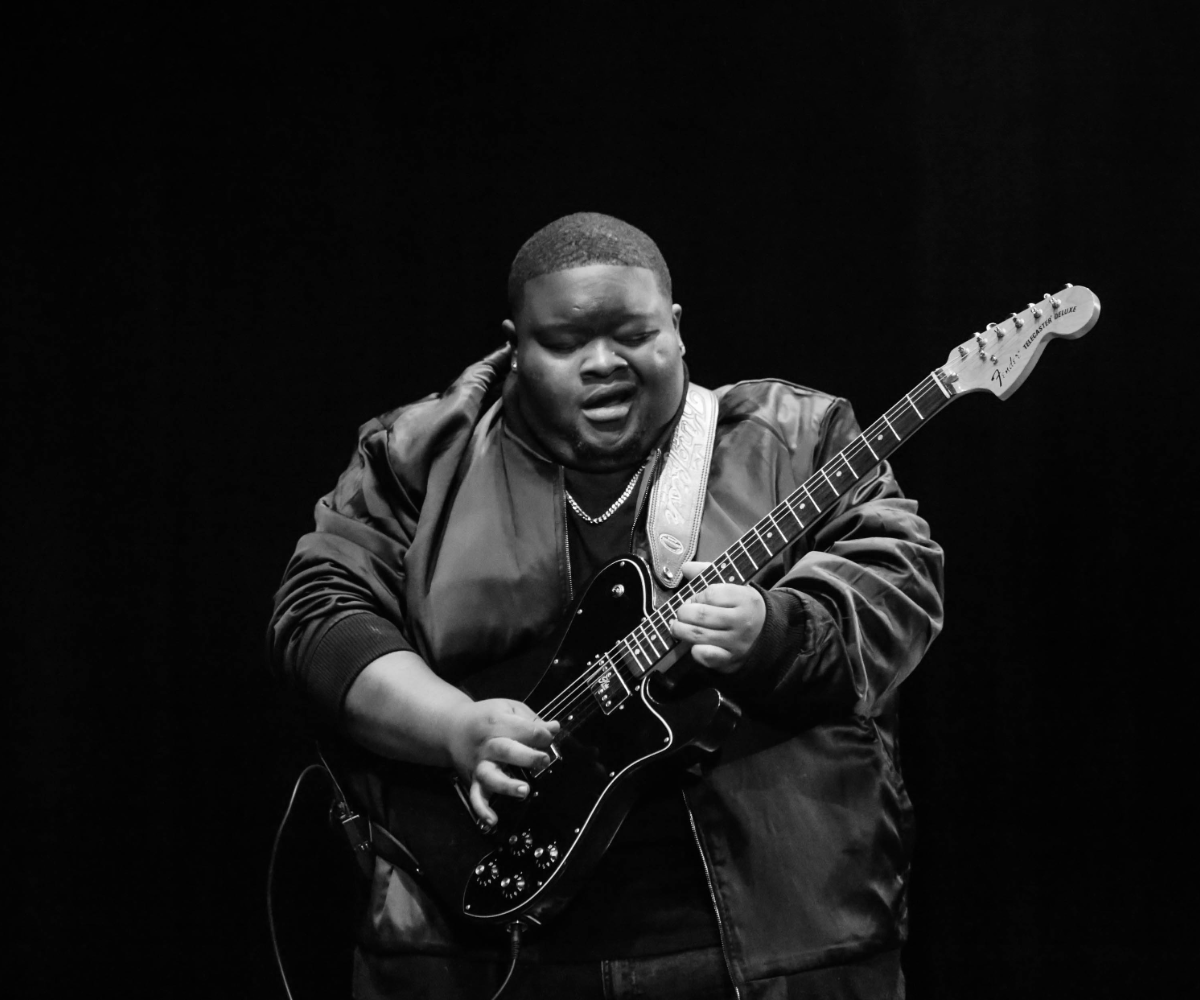
GLENDALE, CA—Forest Lawn will celebrate Black History Month with a free, one-night-only event on Saturday, January 31, 2026, from 4:00-7:30 PM. Forest Lawn, in partnership with producer Charles Lane, will bring African American experiences and culture to life with moving music, dance, and poetry performed by a troupe of singers and dancers and a five-piece band, as well as a keynote speech by Steven Lewis, an award-winning architect and social justice advocate, and an inspiring talk by Zach Andrews, Diversity Apprenticeship Program Director at The Broad. Michael Ellington will narrate the evening’s festivities. A community resource and networking fair with local education, health, housing, and volunteer organizations, along with complimentary refreshments and beverages, will precede the performance.
“Forest Lawn looks forward to our annual Black History Month performance and event each year,” said Rodolfo Saenz, Forest Lawn’s Senior Vice President, Marketing. “The performance brings our community together to celebrate and honor the African American experience through a variety of artistic mediums and forms of expression. The resource fair introduces people to organizations working in our communities, further broadening networks and creating connections.”
Forest Lawn’s Black History Month event takes place on Saturday, January 31, 2026, from 4:00-7:30 PM, inside the Hall of Crucifixion-Resurrection at Forest Lawn–Glendale, 1712 S. Glendale Avenue, Glendale, CA 91205. Doors open at 4:00 PM for the resource fair and pre-show reception with refreshments, music, and prizes, and continues with a 6:00 PM curtain for the performance. Seating is available on a first come, first served basis; standing room only is anticipated. Admission and parking are FREE. Visit forestlawn.com/events for more information.
Forest Lawn Museum’s exhibition “In Bloom: Flowers in Contemporary Art” will also be on view in the neighboring Forest Lawn Museum until 5:00 PM. The exhibition explores contemporary approaches to the timeless floral theme. The media and artworks in the exhibition vary dramatically, with paintings, sculptures, installation, and video that range from naturalistic to abstract, and from playful to contemplative. “In Bloom” features the work of David Flores, DABSMYLA, Francesca Gabbiani and Eddie Ruscha, Simonette David Jackson, Jasmyn Marie, Analia Saban, Kim Schoen, and Tiffanie Turner, with new works by most artists. The exhibition is on view through February 15, 2026. Find additional information at https://museum.forestlawn.com/blogs/forest-lawn-museum-exhibitions/in-bloom-flowers-in-contemporary-art.


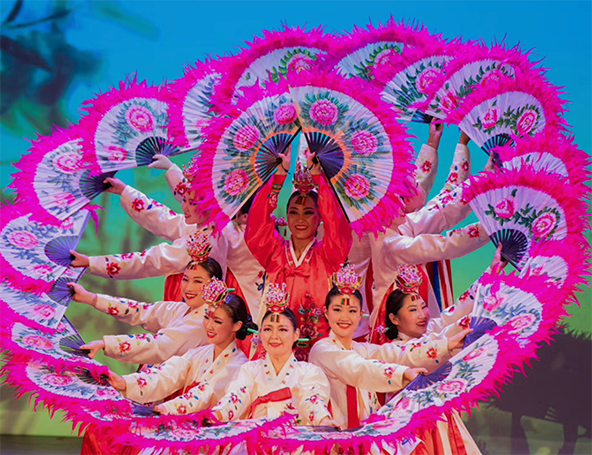
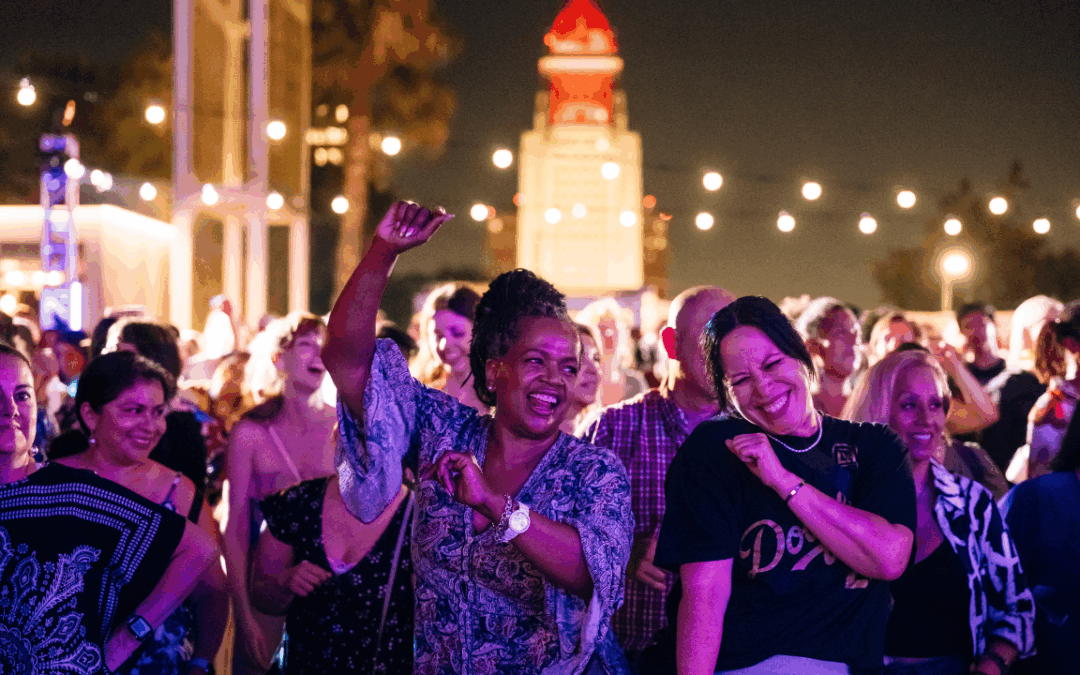
Image credits (left to right): Camel Pugh dances during Forest Lawn’s Black History Month event. Courtesy of Forest Lawn; Joyce Guy sings in the spotlight at Forest Lawn’s Black History Month event. Courtesy of Forest Lawn.
For additional information and media inquiries about the Black History Month event or Forest Lawn Memorial–Parks & Mortuaries, please contact Tom Smith at 323.340.4742 or tsmith@forestlawn.com.
About Forest Lawn Memorial–Parks & Mortuaries
For more than a century, Forest Lawn has been an integral part of Southern California. Since its founding, Forest Lawn has committed itself to providing outstanding service and beautiful environments for family outings, remembering loved ones and commemorating holidays. Forest Lawn’s locations in the Los Angeles, Orange and Riverside counties serve all faiths and cultures, and offer a wide range of celebrations and special events with competitively priced cremation and traditional funeral services throughout Southern California. Glendale – FD 656
About the Hall of Crucifixion-Resurrection
Located next to Forest Lawn Museum, the Hall of Crucifixion-Resurrection showcases the Crucifixion (195 ft. x 45 ft.), which is the largest painting in the Western United States. It was painted by Polish artist Jan Styka in the 1890s. The building also houses the Resurrection (70 ft. x 51 ft.), which was painted by American artist Robert Clark in 1965. Visitors can view the newly revamped 18-minute, documentary-style audiovisual program, which includes a new video and narration that tell the history of two colossal paintings and the unique building that Forest Lawn created to house them. The audiovisual program runs Tuesday–Sunday on the hour (10 AM-4 PM, closed at 1 PM for lunch). Closed occasionally for special events. For more details about the Hall of Crucifixion-Resurrection, visit https://museum.forestlawn.com/pages/hall-of-crucifixion-resurrection.
Great Mausoleum visiting hours: Daily from 9:30 AM–4:15 PM
Admission and parking to Forest Lawn Museum, the Hall of Crucifixion-Resurrection, and the Great Mausoleum are FREE.
For more information or to schedule a free group tour, please call 323.340.4782, email museum@forestlawn.com, or visit https://museum.forestlawn.com/.
The Hall of Crucifixion-Resurrection is located at Forest Lawn—Glendale, 1712 S. Glendale Blvd., Glendale, CA 91205. Please note, the Hall of Crucifixion-Resurrection is located at the top of the hill within Forest Lawn-Glendale. Please follow event signage.
About Forest Lawn Museum
Forest Lawn Museum first opened in 1952 and is now comprised of three galleries and a gift shop. The renowned permanent collection of sculpture, stained glass windows, mosaics, and architecture is spread across Forest Lawn’s six Southern California locations. Forest Lawn’s founder, Dr. Hubert Eaton, wrote in his Builder’s Creed that our park should be “a place where artists study and sketch; where school teachers bring happy children to see the things they read of in books.” In that spirit, selections of Forest Lawn Museum’s permanent collection of photographs, paintings, and bronze and marble sculptures are on display in the museum’s front gallery. Forest Lawn Museum typically dedicates two galleries to world-class rotating exhibits, which focus on topics ranging from aerial photography to puppetry to stained glass.
Forest Lawn Museum is located adjacent to the Hall of Crucifixion-Resurrection, which houses the Crucifixion, a 195-foot wide by 45-foot-high painting by Polish artist Jan Styka. Other notable pieces in Forest Lawn’s collection can be found in the Great Mausoleum, including the Last Supper stained glass window by artist Rosa Caselli-Moretti, the Poets’ Windows, and marble replicas of Michelangelo’s Moses and Pietà.


by Randy Dunbar
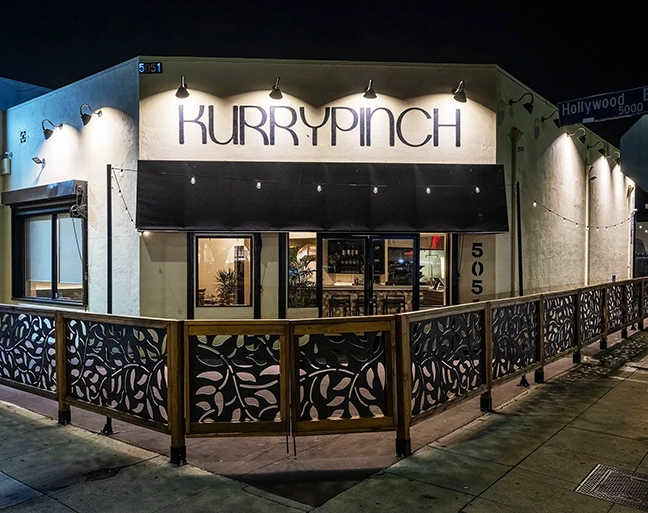
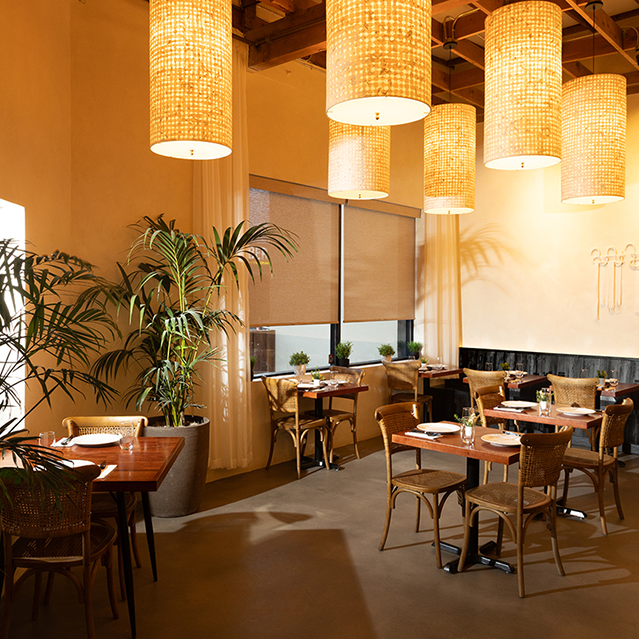
From buzzy openings and long-awaited debuts to chef-driven pop-ups and neighborhood newcomers, this is where food news happens first. We track the latest restaurant openings, menu reveals, and dining destinations shaping the local scene—what’s new, what’s worth the reservation, and what’s coming next.

Scarlett
Opening: January 9, 2026
8715 Beverly Blvd, West Hollywood, CA 90048
https://www.scarlett.love
Scarlett debuts on Beverly Boulevard as an Italian‑Californian restaurant and lounge designed for social dining and late‑night energy. The menu blends Italian classics such as pasta and calamari with California coastal dishes, complemented by cocktails, live music, and an after‑dark vibe.

Lapaba
Opening: Late January 2026 (expected)
558 S Western Ave, Los Angeles, CA 90020
https://www.instagram.com/thelapaba
Lapaba, short for La Pasta Bar, is a highly anticipated Italian‑Korean fusion concept led by chef Nancy Silverton. The restaurant focuses on handmade pastas infused with Korean flavors, fermented ingredients, and inventive small plates served in a modern open‑kitchen setting.

Zampo
Opening: January 27, 2026
Inside Cameo Beverly Hills, 1224 Beverwil Dr, Los Angeles, CA 90035
https://www.cameobeverlyhills.com/zampo
Zampo introduces a Peruvian‑Japanese Nikkei dining experience at the newly reimagined Cameo Beverly Hills. The menu highlights ceviches, seared seafood, soups, and lomo saltado, all presented in a sleek, design‑forward space.

Cheesesteaks by Matū
Opening: January 14, 2026
625B E Colorado Blvd, Pasadena, CA 91101
Cheesesteaks by Matū opens as a casual offshoot of the popular Matū steakhouse, focusing on premium grass‑fed Wagyu cheesesteak sandwiches. The menu is streamlined and approachable, offering dine‑in and takeout options ideal for lunch or dinner.


Page 1 of 1312345...10...»Last »